Books are food for my soul! Pull up a beach chair and stick your toes in the sand as the Jersey surf rolls in and out, now open your book and let your imagination take you away.
Showing posts with label Noir. Show all posts

Wednesday, March 22, 2023

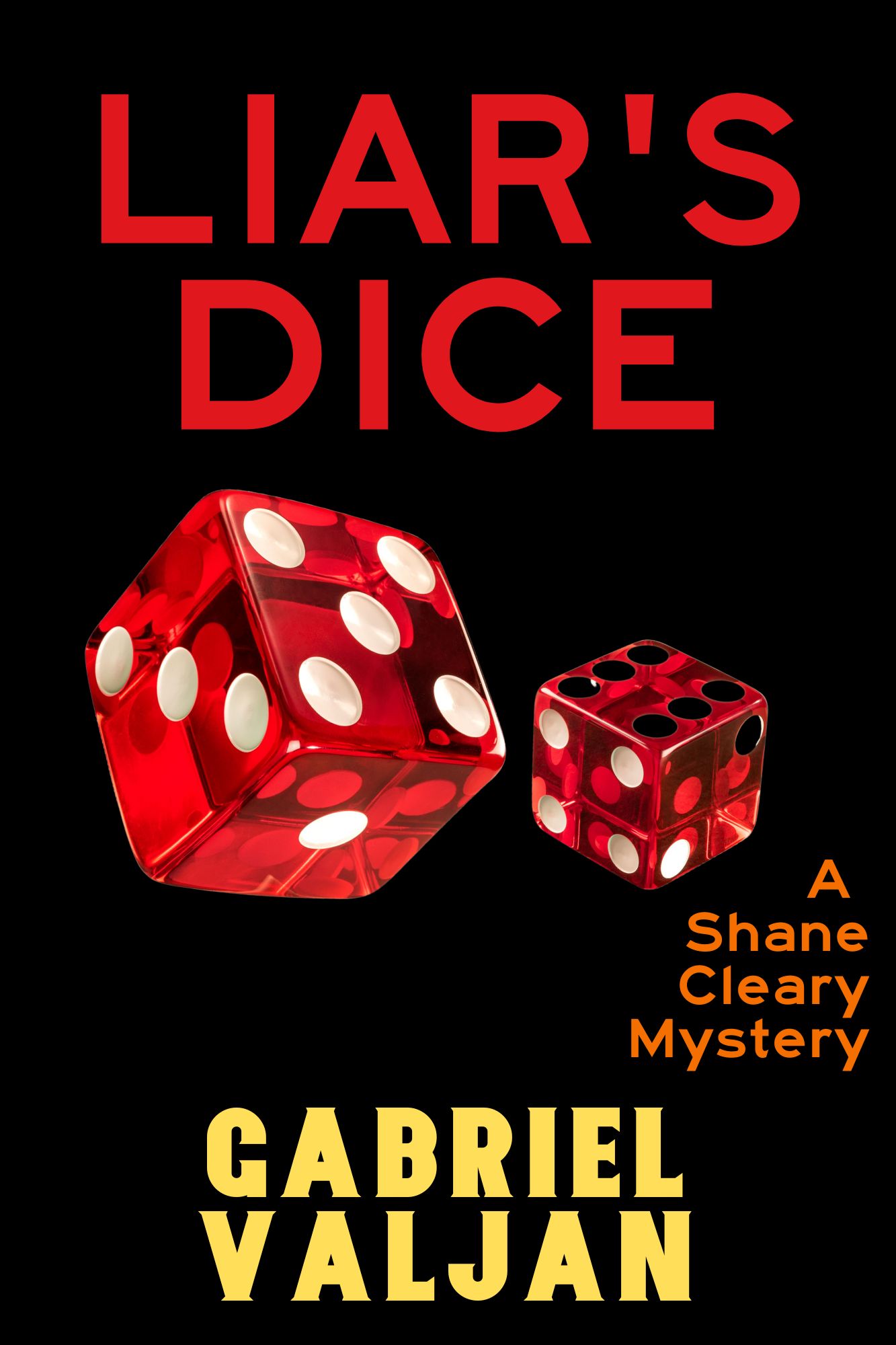
Liar's Dice by Gabriel Valjan (VBT: Book Review)

In association with Partners In Crime Tours, Jersey Girl Book Reviews is pleased to host the virtual book tour event for Liar's Dice by author Gabriel Valjan!


Book Review


Liar's Dice by Gabriel Valjan
Book #4: A Shane Cleary Mystery Series
Publisher: Level Best Books
Publication Date: March 14, 2023
Format: Paperback - 246 pages
               Kindle - 1716 KB
               Nook - 1 MB
ISBN: 978-1685122065
ASIN: B0BHTZN2Z1
BNID: 978-1685122072
Genre: Mystery / Historical Crime Fiction / PI Mystery / Noir Fiction


Buy The Book:


Buy The Series: A Shane Cleary Mystery Series
Book 1: Dirty Old Town
Book 2: Symphony Road
Book 3: Hush Hush
Book 4: Liar's Dice


Disclaimer: I received a copy of the book from the author / publisher via NetGalley in exchange for my honest review and participation in a virtual book tour event hosted by Partners In Crime Book Tours.


Book Description:

Boston might be white with snow, but there’s nothing but a winter’s darkness for Shane Cleary, a former cop, veteran, and reluctant PI. There’s an international war within the mafia over drugs, and he has been asked to find the nephew of the local crime boss. When federal agencies descend on the city and order the police department to stand down on a homicide, the BPD reaches out to Shane for answers.

Shane’s past in Vietnam comes to haunt him when the corpse of a veteran is found on Boston Common, frozen to death in front of the State House. Then, a former army buddy comes to town looking for justice. His presence endangers all that Shane holds dear.

Shane must come to terms with a side of himself he thought he had left behind. The mounting body count and circumstances compel him to play a game of Liar’s Dice. Can he deceive and detect deception around him? Protect those he loves, while he solves the cases?


Praise for Liar’s Dice:


“Gabriel Valjan writes like a poet but his PI Shane Cleary packs a wallop worthy of Mickey Spillane.” -
Clea Simon, Boston Globe bestselling author of Hold Me Down

“Gabriel Valjan is the godfather of organized crime fiction and Liar's Dice is all the proof you need.” - James L’Etoile, author of the Detective Nathan Parker series

“Gritty, smart, sharply written, Valjan’s Liar’s Dice is a welcome addition to the canon of fine PI fiction.” - Reed Farrel Coleman, New York Times bestselling author of Sleepless City

“A fast-paced mystery that kept me flipping the pages, needing to find out what would happen next. Shane Cleary is a complex, brilliantly written protagonist. A terrific read.” - Hannah Mary McKinnon, internationally bestselling author of Never Coming Home

“Warning: Pick up a copy, turn the page, and you’ll be hooked. Liar’s Dice ticks the boxes: an interesting tale that’s economical and tight, descriptions that are full and rich, dialogue that’s real, and characters that spring to life. Gabriel Valjan just has a way of making every word count.” - Dietrich Kalteis, winner of the 2022 Crime Writers of Canada Award of Excellence for best novel

“Gabriel Valjan crafts a vivid portrait of 1970s Boston to life in Liar's Dice. Shane Cleary deserves to stand shoulder-to-shoulder with the city’s other famous PIs—a haunted but compassionate character who cuts through a swath of Mob crime with Valjan’s trademark wit and style.” - James D.F. Hannah, Shamus-winning author of Behind The Wall Of Sleep and She Talks To Angels

As much an intricately plotted mystery as a deep exploration of the dark side of Boston in the 1970s, this latest installment of the critically-acclaimed Shane Cleary series takes an unflinching view of the once powerful Boston mafia, while Shane deals with the aftermath of his time in Vietnam. Richly drawn characterization and a well-plotted mystery will have you eagerly awaiting what comes next in this enticing series! - Edwin Hill, author of The Secrets We Share


Book Excerpt:


Chapter 1

Thou Shalt Not Say No

I heard the slap of the Boston Globe on our doorstep.

It was seven-thirty and Bonnie had already kissed me goodbye. It was a kiss. A long, slow kiss to make a man lose his dignity. I begged her to stay home, to play hooky from work and give the boys in the office a reprieve. She told me she couldn’t. I watched her walk out the front door. Her perfume may have hinted of spring but the mercury in the thermometer said winter.

The phone rang and interrupted my trip to the front door for the paper. I answered on the second ring.

“Glad you’re still there,” she said.

“Bonnie?”

“I’m at a payphone on Comm. Ave.”

“Forget something?”

“I noticed a Cadillac parked across the street when I left.”

“It’s a car that stands out, I’ll give you that, but what’s the problem?”

“The man inside the car. He’s getting out.”

“I thought I was the PI and you were the lawyer.”

“I’m serious, Shane.”

“So am I. Okay, I’ll play. Describe him to me?”

“Six-six. Menacing. Dark winter coat. He’s headed to our door. Wait, he’s stopped.”

“He stopped?”

“To light a cigarette, but he’s not having any luck. He keeps trying with his lighter.”

“Tony Two-Times.”

“That’s Tony Two-Times? Not exactly subtle, is he?”

“It goes with the job description.”

“Oh my god, Shane. He’s reached into his jacket.” I’d never heard Bonnie’s voice hit that note, not even during sex, though in my defense, this was panic and not ecstasy. We were nearing our anniversary, and I suppose months of cohabitation or what the Census Bureau calls POSSLQ or Person of Opposite Sex Sharing Living Quarters had eroded her tough exterior.

“Never mind,” she said. “It’s a newspaper. I thought he might’ve had a gun.”

“Go to work, Bonnie.”

I did the rude thing and hung up on her. It’s not that I wanted to do it, but Tony Two-Times, uninvited and unannounced, was not the same thing as the guy at your door with the news you’ve won the Publishers Clearing House Sweepstakes. Tony was a ‘friend’ and the mob always sent your friend to kill you. I moved fast and pulled my .38 out of the holster, hidden under a coat on the rack. I opened the door and kept the revolver behind my back.

The cold air punched my lungs and my eyes watered. I found Tony doubled over, picking up my Boston Globe. When he stood upright, he blocked the wind and the sun. An unlit cigarette stuck to his lower lip. “You gonna invite me in, or what?”

I stepped aside, back against the door. He pressed the paper into my chest. I put a hand over it. He paused before he stepped in. His dark eyes bore into me. “Relax, Cleary, and saddle the Colt you’re hiding behind you.”

“You could’ve called.”

“This conversation is best in person, face to face.”

“If you say so, Tony.”

“I say so. I’ve gotta job for you.”

Tony had tapped one foot against the other to knock off any snow, salt, or sand. He took the cigarette from his lips and pocketed it. He wiped his feet on the small mat, and took off his hat and coat and hung them on the coat rack. I holstered my sidearm and directed him to the kitchen. He walked down the hallway, talking. “You really thought you needed to draw your piece on me?”

“You weren’t what I expected with the morning paper.”

***

Excerpt from Liar's Dice by Gabriel Valjan. Copyright 2023 by Gabriel Valjan. Reproduced with permission from Gabriel Valjan. All rights reserved.


My Book Review:

In Liar's Dice, book four in the Shane Cleary Mystery Series, author Gabriel Valjan takes the reader back to 1970s Boston to follow the latest investigative case of ex-Boston cop turned PI Shane Cleary. 

In this installment of the series, Shane is asked to find Sal, the nephew of Mr.B., the mob boss of Boston's Italian North End. There is an undercurrent of a potential territory feud that has it's sights on Boston, and Mr.B. isn't pleased with this development, especially when it involves bringing distrbution of cocaine into the city by the Canadian mob, the Boston Irish Southie Winter Hill Gang, and the NY five families. And if that isn't enough, Jimmy Hoban, a Vietnam veteran and advocate for veterans, the mentally ill, and the homeless, has been found frozen on the street, which draws Shane's attention since he is also an Army Vietnam veteran. And to make matters worse, tension in the city increases when three Boston Police Officers are shot dead, and the Feds show up. Shane has a lot on his plate, but it just gets more intense when an old Vietnam Army buddy shows up, and Shane's memories of Vietnam surface when his buddy Hunter is in town on a personal mission. Shane gets caught up in a dangerous game of Liar's Dice, a game of guesses, bluffs, and deception. Can Shane put the pieces of the puzzle together, and solve the interwining cases that are wrecking havoc in Boston? 

Liar's Dice is a riveting crime story that easily draws the reader in from the start. The author provides the reader with a fascinating and richly detailed crime thriller set in 1970s Boston. Told in the first person narrative by Shane, this gritty noir story has enough drama, secrets, deception, tension, greed, murder, and surprising twists and turns that keeps the reader guessing if Shane will be able to uncover enough evidence to solve the various cases that are plaguing Boston. Shane deals with hostility from his ex-police brethren, crooked cops, mobsters, and wealthy individuals who try to hinder his every move. Trouble always seem to find Shane, it's the hazard of his job and it comes with the territory, but it doesn't deter him from finding the truth. 

This suspenseful storyline is about intertwining cases that Shane slowly puts the pieces of the puzzle together, uncovering the underlying mafia tension, drug deals, and corruption in Boston that will keep the reader guessing. With an intriguing cast of characters, a great description of Boston and the throwback to the 1970s decade, and flashbacks to Shane's military past, Liar's Dice takes the reader on one heck of a thrilling rollercoaster ride!

Liar's Dice is a well-written, fast paced crime thriller story that left me interested in finding out what Shane's next investigative adventure will be in the continuation of the series.


RATING: 5 STARS  


About The Author


Gabriel Valjan writes historical crime fiction. He is the recipient of the Macavity Award for Best Short Story and he has been listed for the Bridport and Fish Prizes, the Agatha, Anthony, Derringer, and Silver Falchion Awards. He lives in Boston’s South End and answers to a tuxedo cat named Munchkin.


Author Blog - Gabriel's Wharf
Amazon Author Page
Facebook
Twitter
BookBub
Instagram
Goodreads


Virtual Book Tour Event


Tour Participants:

03/19 Review @ Leanne bookstagram

03/20 Review @ Book Reviews From an Avid Reader

03/21 Review @ Blogging with A

03/22 Review @ Jersey Girl Book Reviews

03/23 Review @ Celticladys Reviews

03/23 Review @ mokwip8991

03/24 Review @ Melissa As Blog

03/24 Review @ Novels Alive

03/25 Review @ Coffee and Ink

03/26 Review @ Guatemala Paula Loves to Read


Wednesday, April 13, 2022

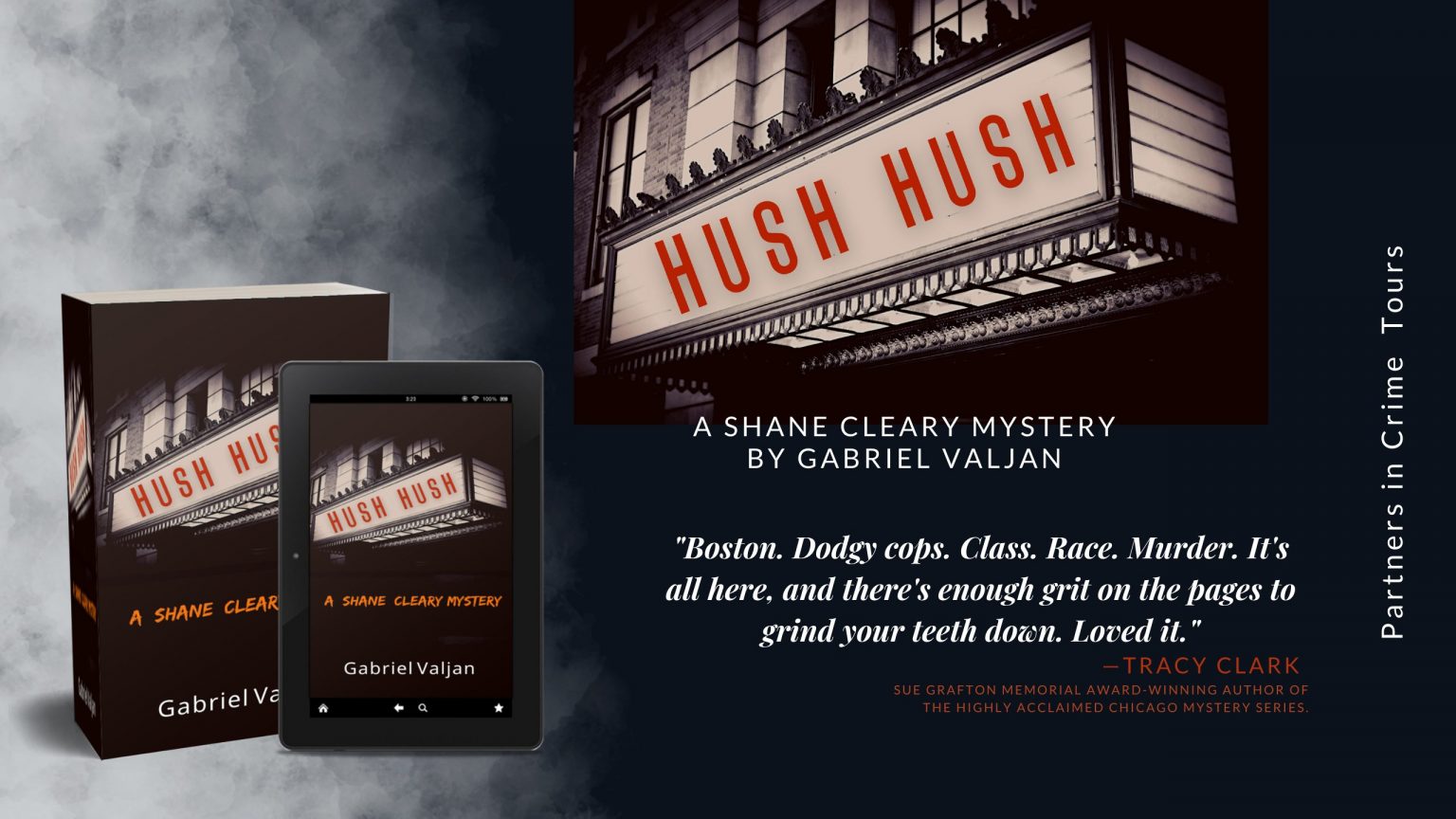
Hush Hush by Gabriel Valjan (VBT: Book Review)

In association with Partners In Crime Virtual Book Tours, Jersey Girl Book Reviews is pleased to host the virtual book tour event for Hush Hush by author Gabriel Valjan!


Book Review


Hush Hush by Gabriel Valjan
Book 3: A Shane Cleary Mystery Series
Publisher: Level Best Books
Publication Date: January 11, 2022
Format: Paperback - 242 pages
               Kindle - 1689 KB
               Nook - 1 MB
ISBN: 978-1685120436
ASIN: B09KKPVCNB
BNID: 978-1685120443
Genre: Mystery / Crime Fiction / Historical Fiction / Noir / Procedural


Buy The Book:


Buy The Series: A Shane Cleary Mystery Series
Book 1: Dirty Old Town
Book 2: Symphony Road
Book 3: Hush Hush


Disclaimer: I received a copy of the book via the author / publisher in exchange for my honest review and participation in a virtual book tour event hosted by Partners In Crime Virtual Book Tours.


Book Description:


Shane Cleary is living a comfortable life. He has money. He has a girl.

But a visit from a friend shakes up his status quo. Chess may be the metaphor, but the case is one that lifts the lid on problems nobody in Boston wants to talk about.

Murder. Race. Class. It’s all Hush Hush.

Neither the crime nor the verdict is simple, and yet it is Black and White.

Shane will need more than a suit of armor if he wants to play knight. Can Justice be found? And at what cost?


Book Excerpt:

I pulled the door open to Charlie’s Sandwich Shoppe. The spelling might’ve been from Middle English and seemed as medieval as Robin Hood, but a Greek owned the place. On any given day, Arthur the proprietor was Art or Artie and, like his old man before him, he worked the grill. Charlie’s was open twenty-four a day, seven days a week, including all the major holidays, Jewish or Gentile.

I’ve eaten breakfast countless times at his counter. The place did have tables, but it was designed for food on the move, men on the job, and people on the make. Walk into the shop and it was sometimes cops on one side of the room, gangsters on the other. Peace was a meal until everyone returned to the pavement outside, and there was no one-way streets about it: the South End was trouble. Charlie’s eggs, hash, bacon, and stiff coffee worked harder than the UN.

Charlie’s dated back to the Twenties. Framed photographs, some of them signed and some not, hung on the wall and told a history most Americans had forgotten, and why I supported the place. The Negro Motorist Green Book in hand told jazzmen and other itinerant talent that Charlie’s was a safe haven. In all of Boston, this was the one place where they could eat and, for a time, one of the few places where they were allowed to eat. Segregation ruled Boston until 1973, when public housing and schools were desegregated.

Sammy Davis, Jr. hoofed outside Charlie’s door for change, and he performed with his family at The Gaiety Theatre, which is now in the Combat Zone. Barred from the vaudeville stages in town, black talent played the burlesque houses. Audiences in these naughty houses were integrated. Some of the acts were women-owned and they managed acts that toured the TOBA circuit. TOBA stood for Tough on Black Asses.

There were no police officers in the place when I sat next to a familiar face at the counter. People called him Charcoal. He was thin as a stick and dark as his nickname. We sat on stools covered in cracked vinyl, and opposite wooden refrigerators there since Charlie’s opened its doors in 1927. Eggs sizzled, bacon puckered and sputtered, and conversations tumbled in and out like the tide. Arthur could hear above the din and asked me what I wanted, and I told him. “Turkey hash.”

A waitress placed a cup and saucer before me and poured caffeine. Charlie’s coffee was unleaded, and dark as unchanged oil and stiffer than Niagara starch. While I waited, I sipped and stared out the window. Life on Columbus Ave was a steady traffic of folks to and from the trains at Back Bay station around the corner.

There was another slice of history. Back Bay was the epicenter of the Pullman Porter Strike, conducted and carried to victory by the first black union, the Brotherhood of Sleeping Car Porters. Their office was above Charlie’s Shoppe. Membership was comprised of black men from the south. They traveled throughout the homeland for the union’s cause for better wages and working conditions. I doubt they slept a wink on the train through Jim Crow territory.

I was two forkfuls into my turkey hash, and Charcoal was on his third cup of joe when a burgundy Cadillac, with all the trimmings, rolled up to the front of Charlie’s. The man driving it wore large sunglasses and passed for a thinner version of Isaac Hayes. He wore business threads, and his head was shaved and glistened like a chocolate bullet. He had his back to the car and was facing us when a car stopped parallel to his parked car. Boston Police.

Arthur stopped and worked a washcloth over his hands. Every head was turned to the spectacle. Our Isaac Hayes heard a cop call him out. There was glass between us and him, but it wasn’t hard to guess the conversation on the street. Patrons of Charlie’s had seen this Movie of the Week and they knew the script. The question was whether Isaac stuck to his lines or improvised. The cop was almost out of the car, his head visible over the roof of the patrol car. He yelled, “Hey, Boy.”

Isaac hadn’t heard him until he’d seen the reflection of the officer and the cruiser in Charlie’s window. He stopped, removed his glasses, and turned around. A customer leaving Charlie’s propped the door so we could eavesdrop.

“Hands where I can see them.”

“Is there a problem, Officer?”

“We ask the questions, not you.”

Isaac stood his ground. The cop, out of the vehicle now, walked around the back of his car. His partner exited the passenger side. I expected a citation for being double-parked.

The cop jabbed his finger. “What are you doing?”

There was distance between the officers and the young man, but they were closing in fast. I understood what they were doing. They were asserting dominance and they wanted to spark a reaction. With enough space between them, if Isaac ran, one of the policemen could sprint and catch him from an angle. They’d talk smack as they approached, looking for an excuse to cuff him. If Isaac answered wrong, used the wrong tone of voice, they would ride him.

“I asked you what you’re doing.”

Isaac was smart. He raised his hands. Now came the dilemma because nothing he said mattered.

“Did I tell you to put your hands up?”

“No.”

“You going to answer me?” The tone of voice was sharp as a knife’s edge. “I asked you what you’re doing here.”

“Here to pick up a sandwich before work, Officer.” He glanced over his shoulder.

I hear courtesy and respect in the answer. Cops heard sarcasm.

“A sandwich, is that right?”

“Yes. A sandwich before work.”

“You have a job?”

Another lure, an insult disguised as a question. When cops testified in court, they’d tell the jury that they repeated answers as a way to verify information, but nobody asked them how they asked their questions.

The partner walked around the Cadillac. He used his foot to test the fender. He aimed to test a man’s pride in his set of wheels. His hand touched the rear light and he ran his hand over the body as if he checked for dirt. “This your car?”

“Yes.”

The cop closest to Isaac said, “You sure about that?” He glanced over his shoulder. “We run those tags and we won’t hear it was stolen.”

“No.”

“No what? What are you trying to say? I don’t understand you when you mumble.”

Another classic strategy. Isaac spoke clear as sunlight and kept his answers trimmed to simple. The more you talked, the more your own words were used against you. If he denied mumbling, he’d look defensive, and the cops would consider Isaac as dangerous as the third rail.

I waited for them to ask Isaac what his job was and where. They’d look at the Cadillac while he talked. Their looking at the car implied they didn’t believe the job matched the income to purchase a luxury vehicle, or that a Cadillac was a pimpmobile. The two cops might then tag-team Isaac with questions. Cops counted on confusion and if Isaac so much as stuttered, they would accuse him of being drunk, drugged, or agitated.

Isaac answered, “The car is mine. Registration is in the glove compartment.”

“License?”

“On me, but you can reach into my breast pocket for it.”

“On you?” the lead cop said. The smirk showed teeth.

“In my wallet, where I keep my cash so I can pay for my sandwich.”

The partner chimed in. “Glove compartment include proof of insurance?”

“Registration and insurance are in the glove compartment, yes.”

Now the lead cop was less than a foot away from Isaac. “Now, let me understand you right. You’re giving us permission to search your car?”

“Registration and insurance are in the glove compartment.”

“That’s not what I asked you, son.” The officer was eye-to-eye with Isaac. Any closer and it was a date. He turned and pointed to the car. “We won’t find anything else inside?”

Charcoal next to me said. “I think young blood could use some help from the community, right about now.” He got off the stool and walked to the open door. Other men followed him and formed a line in front of Charlie’s Sandwich Shoppe. I joined them.

The cops’ disposition changed immediately when he counted us.

“You folks go on back inside. This doesn’t concern you.”

A long hard minute passed and not a word was said. There was nothing but hard, tired stares. Isaac had not put his hands down and he hadn’t moved from where he was standing. Arthur appeared, a brown bag in his hand. He handed it to Isaac. “Breakfast is on me, and I hope the experience doesn’t stop you from visiting Charlie’s again.”

“This is a police matter,” the cop said to Arthur.

“And this is my business, and this young man is a customer.”

The cop moved in on Arthur. “This does not concern you.”

Charcoal stepped forward. “I suggest you officers either search the car, or call it a day.”

“You suggest?”

“Indeed, I do—and I advise you to heed my advice.”

The cop approached. When he did, the men behind Charcoal took one step forward and held the line. The cop stared into Charcoal’s face. “Heed your advice, and who the fuck are you?”

Charcoal flinched a smile. “I’m an attorney, labor and civil rights among other things, and I’d be happy to provide you with my card.”

“You’re a lawyer?”

“What’s the matter, Officer? You’ve never met a Negro lawyer or thought a black man might have more education than you and your forebears combined.”

“You know nothing about my forebears.”

“Oh, but I do, son. I do.”

The senior cop reassessed the situation. He looked at each man behind Charcoal, including me. Cops did this to save face. The pair backpedaled and got into their car. Arthur stood next to the opened door and thanked each of his patrons as they entered his shop. Charcoal and I were the last in the long line. I asked Arthur if I could make change for a phone call.

Arthur said I could use the house phone and pointed me to where I could find it. I called John and he answered. I said I’d be down to his place to talk with his friend, the kid’s father. “You’ll take the case?”

“I didn’t say that. I want to talk the man first, and John?” He waited. “What was with the chess metaphor and all?”

“I wasn’t about to talk street, in front of your lady.”

“You showed up unannounced. How did you find me?”

John said Bill’s name and, “Did something change your mind?”

“Change, no. More like I saw something that made me reconsider.”

“Watched something on television?”

“That’s make-believe. I’m talking about real life.”

***

Excerpt from HUSH HUSH by Gabriel Valjan. Copyright 2022 by Gabriel Valjan. Reproduced with permission from Gabriel Valjan. All rights reserved.


My Book Review:


In Hush Hush, book three in the Shane Cleary Mystery Series, author Gabriel Valjan takes the reader back to 1970s Boston to follow the latest investigative case of ex-Boston cop turned PI Shane Cleary. Shane's PI license has lapsed, and he has no intention of renewing it. His new job is managing rental properties. But Shane's friend John asks him to look into the Dawson murder case for a friend of his whose son has been convicted of voluntary manslaughter. Shane agrees to research the case for new evidence to grant an appeal, which turns into uncovering a disturbing case involving race, wealth, and police corruption. 

Hush Hush is a riveting crime story that easily draws the reader in from the start. The author provides the reader with a fascinating and richly detailed crime thriller set in 1970s Boston. Told in the first person narrative by Shane, this gritty noir story has enough drama, secrets, deception, tension, and surprising twists and turns that keeps the reader guessing if Shane will be able to uncover enough new evidence to grant an appeal for the case. Shane deals with hostility from his ex-police brethren, crooked cops, mobsters, and wealthy individuals who try to hinder his every move. Trouble always seem to find Shane, it's the hazard of his job and it comes with the territory, but it doesn't deter him from finding the truth. 

This suspenseful storyline is about a murder case that Shane slowly puts the pieces of the puzzle together, uncovering the underlying race relations and corruption during that time in Boston that was kept hush hush, it will keep the reader guessing. With an intriguing cast of characters, a great description of Boston and the throwback to the 1970s decade, and flashbacks to Shane's past, Hush Hush takes the reader on one heck of a thrilling rollercoaster ride!

Hush Hush is a well-written, fast paced crime thriller story that left me interested in finding out what Shane's next investigative adventure will be in the continuation of the series.


RATING: 5 STARS  


About The Author


Gabriel Valjan is the author of the Roma Series, The Company Files, and the Shane Cleary Mysteries. He has been nominated for the Agatha, Anthony, Silver Falchion Awards, and received the 2021 Macavity Award for Best Short Story. Gabriel is a member of the Historical Novel Society, ITW, MWA, and Sisters in Crime. He lives in Boston.


Author Blog - Gabriel's Wharf
Amazon Author Page
Facebook
Twitter
BookBub
Instagram
Goodreads


Virtual Book Tour Event


Tour Participants:


03/21 Review @ Book Reviews From an Avid Reader

03/22 Review @ flightnurse70_book_reviews

03/30 Review @ Our Town Book Reviews

04/04 Review @ Splashes of Joy

04/05 Review @ sunny island breezes

04/13 Review @ Celticladys Reviews

04/13 Review @ Jersey Girl Book Reviews

04/14 Review @ One More Book To Read

04/14 Review @ The World As I See It

04/15 Review @ Blogging With A

04/15 Review @ I Read What You Write


Monday, February 22, 2021

Symphony Road by Gabriel Valjan (VBT: Book Review)

In association with Partners In Crime Virtual Book Tours, Jersey Girl Book Reviews is pleased to host the virtual book tour event for Symphony Road by author Gabriel Valjan!


Book Review


Symphony Road by Gabriel Valjan
Book 2: A Shane Cleary Mystery Series
Publisher: Level Best Books
Publication Date: January 12, 2021
Format: Paperback - 232 pages
               Kindle - 1447 KB
               Nook - 2 MB
ISBN: 978-1953789075
ASIN: B08QYS875L
BNID: 978-1953789082
Genre: Mystery / Crime Fiction / Historical Fiction / Noir / Procedural


Buy The Book:


Buy The Series: A Shane Cleary Mystery Series
Book 1: Dirty Old Town
Book 2: Symphony Road


Disclaimer: I received a copy of the book via the author / publisher in exchange for my honest review and participation in a virtual book tour event hosted by Partners In Crime Virtual Book Tours.


Book Description:

Trouble comes in threes for Shane Cleary, a former police officer and now, a PI.

Arson. A Missing Person. A cold case.

Two of his clients whom he shouldn’t trust, he does, and the third, whom he should, he can’t.

Shane is up against crooked cops, a notorious slumlord and a mafia boss who want what they want, and then there’s the good guys who may or may not be what they seem.

Praise for Symphony Road:
“The second installment in this noir series takes us on a gritty journey through mid-seventies Boston, warts and all, and presents Shane Cleary with a complex arson case that proves to be much more than our PI expected. Peppered with the right mix of period detail and sharp, spare prose, Valjan proves he’s the real deal.” – Edwin Hill, Edgar finalist and author of Watch Her

“Ostracized former cop turned PI Shane Cleary navigates the mean streets of Boston’s seedy underbelly in Symphony Road. A brilliant follow up to Dirty Old Town, Valjan’s literary flair and dark humor are on full display.” – Bruce Robert Coffin, award-winning author of the Detective Byron Mysteries

“A private eye mystery steeped in atmosphere and attitude.” – Richie Narvaez, author of Noiryorican


Book Excerpt:


I went to cross the street when the wheels of a black Cadillac sped up and bristled over tempered glass from a recent smash-and-grab. The brake lights pulsed red, and a thick door opened. A big hulk stepped out, and the car wobbled. The man reached into his pocket. I thought this was it. My obituary was in tomorrow’s paper, written in past tense and in the smallest and dullest typeface, Helvetica, because nothing else said boring better.

Click. Click. “I can never get this fucking thing to light.”

It was Tony Two-Times, Mr. B’s no-neck side man. His nickname came from his habit of clicking his lighter twice. “Mr. B wants a word.”

“Allow me.” I grabbed the Bic. The orange flame jumped on my first try and roasted the end of his Marlboro Red. “You really oughta quit.”

“Thanks for the health advice. Get in.”

Tony nudged me into the backseat. I became the meat in the sandwich between him and Mr. B. There was no need for introductions. The chauffeur was nothing more than a back of a head and a pair of hands on the wheel. The car moved and Mr. B contemplated the night life outside the window.

“I heard you’re on your way to the police station to help your friend.”

“News travels fast on Thursday night. Did Bill tell you before or after he called me?”

“I’m here on another matter.”

The cloud of smoke made me cough. Tony Two-Times was halfway to the filter. The chauffeur cracked the window a smidge for ventilation. As I expected, the radio played Sinatra and there were plans for a detour. A string of red and green lights stared back at us through a clean windshield.

“A kid I know is missing,” Mr. B said.

“Kids go missing all the time.”

“This kid is special.”

“Has a Missing Persons Report been filed?”

The look from Mr. B prompted regret. “We do things my way. Understood?”

We stopped at a light. A long-legged working girl with a chinchilla wrap crossed the street. She approached the car to recite the menu and her prices, but one look at us and she kept walking.

“Is this kid one of your own?”

The old man’s hand strummed leather. The missing pinky unnerved me. I’ve seen my share of trauma in Vietnam: shattered bones, intestines hanging out of a man, but missing parts made me queasy. The car moved and Mr. B continued the narrative.

“Kid’s a real pain in my ass, which is what you’d expect from a teenager, but he’s not in the rackets, if that’s what you’re wondering. This should be easy money for you.”

Money never came easy. As soon as it was in my hand, it went to the landlady, or the vet, or the utilities, or inside the refrigerator. I’d allow Mr. B his slow revelation of facts. Mr. B mentioned the kid’s gender when he said “he’s not in the rackets.” This detail had already made the case easier for me. A boy was stupider, easier to find and catch. Finding a teenage girl, that took something special, like pulling the wings off of an angel.

“He’s a good kid. No troubles with the law, good in school, excellent grades and all, but his mother seems to think he needed to work off some of that rebellious energy kids get. You know how it is.”

I didn’t. The last of my teen years were spent in rice paddies, in a hundred-seventeen-degree weather—and that was before summer—trying to distinguish friendlies from enemies in a jungle on the other side of the planet. And then there were the firefights, screams, and all the dead bodies.

“Does this kid have a girlfriend?” I asked.

Mr. B said nothing.

“A boyfriend then?” That question made Mr. B twist his head and Tony Two-Times elbowed me hard. “I’ve got to ask. Kids these days. You know, drugs, sex, and rock’ n roll.”

“The kid isn’t like your friend Bill, Mr. Cleary.”

The mister before Cleary was a first. The ribs ached. I caught a flash of the driver’s eyes in the rearview mirror. Mr. B conveyed specifics such as height and weight, build, the last known place the kid was seen, the usual hangouts and habits. This kid was All-American, too vanilla, and Mr. B had to know it. Still, this kid was vestal purity compared to Mr. B, who had run gin during Prohibition, killed his first man during the Depression, and became a made-man before Leave It to Beaver aired its first episode on television.

The car came to a stop. The driver put an emphasis on the brakes. We sat in silence. The locks shot up. Not quite the sound of a bolt-action rifle, but close. Mr. B extended his hand for a handshake. I took it. No choice there. This was B’s way of saying his word was his bond and whatever I discovered during the course of my investigation stayed between us, the Father, the Son and the Holy Ghost.

“I’ve got to ask,” I said.

“I’ll pay you whatever you want.”

“It’s not that,” I said, feeling Tony Two-Times’ breath on the back of my neck. “Did you hire Jimmy C to do a job lately?”

“I did not.”

“And Bill called me, just like that?” I knew better than to snap my fingers. Tony would grab my hand and crush my knuckles like a bag of peanuts. A massive paw on the shoulder told me it was time to vacate the premises, but then Mr. B did the tailor’s touch, a light hand to my elbow. “Jimmy is queer like your friend, right?”

“What has that got to do with anything?”

“When it comes to friends, you forgive certain habits, like I allow this idiot over here to smoke those stupid cigarettes. Capisci?”

“Yeah, I understand.”

“Good. Now, screw off.”

I climbed over Tony Two-Times to leave the car. Door handle in my grip, I leaned forward to ask one last thing, “You know about Jimmy’s predicament?”

“Ironic, isn’t it?” Mr. B said.

“What is?”

“I know everything in this town, except where my grandnephew is. Now, shut the door.”

The door clapped shut. I heard bolts hammer down and lock. There was a brief sight of silhouettes behind glass before the car left the curb. I had two cases before breakfast, one in front of me, and the other one, behind me in the precinct house. There was no need for me to turn around. No need either, to read the sign overhead.

The limestone building loomed large in my memory. Two lanterns glowed and the entrance, double doors of polished brass, were as tall and heavy as I remembered them. It was late March and I wasn’t Caesar but it sure as hell felt like the Ides of March as I walked up those marble steps.

***

Excerpt from Symphony Road by Gabriel Valjan. Copyright 2021 by Gabriel Valjan. Reproduced with permission from Gabriel Valjan. All rights reserved.


My Book Review:

In Symphony Road, book two in the Shane Cleary Mystery Series, author Gabriel Valjan takes the reader back to 1970s Boston to follow the latest investigative cases of ex-Boston cop turned PI Shane Cleary. Shane has just wrapped up investigating a blackmail case and a missing person case, when three new cases come his way: proving the innocence of an arsonist in a slumlord building fire with a dead body; investigating the disappearance of the local mafia don's grandnephew; and a request by the Commissioner to investigate the closed case of a local activist whose death was ruled as an overdose. 

Symphony Road is a riveting crime story that easily draws the reader in from the start. The author provides the reader with a fascinating and richly detailed crime thriller set in 1970s Boston. Told in the first person narrative by Shane, this gritty noir story has enough drama, secrets, deception, tension, and surprising twists and turns that keeps the reader guessing if Shane will be able to solve all three cases, while dealing with hostility from his ex-police brethren, crooked cops, mobsters, and a variety of criminal types that try to hinder his every move. Trouble always seem to find Shane, it's the hazard of his job and it comes with the territory, but it doesn't deter him from finding the truth. 

With a cast of intriguing characters, a suspenseful storyline consisting of three cases that will keep the reader guessing, a great description of Boston and the throwback to the 1970s decade, and flashbacks to Shane's past, Symphony Road takes the reader on one hell of a thrilling rollercoaster ride!

Symphony Road is a well-written, fast paced crime thriller story that left me interested in finding out what Shane's next investigative adventure will be in the continuation of the series.


RATING: 5 STARS  


About The Author


Gabriel Valjan lives in Boston’s South End. He is the author of the Roma Series and Company Files (Winter Goose Publishing) and the Shane Cleary series (Level Best Books). His second Company File novel, The Naming Game, was a finalist for the Agatha Award for Best Historical Mystery and the Anthony Award for Best Paperback Original in 2020. Gabriel is a member of the Historical Novel Society, International Thriller Writer (ITW), and Sisters in Crime.


Author Blog - Gabriel's Wharf
Amazon Author Page
Facebook
Twitter
BookBub
Instagram
Goodreads


Virtual Book Tour Event


Tour Participants:


02/02 Showcase @ Im Into Books

02/03 Guest post/showcase @ Novels Alive

02/04 Interview @ A Blue Million Books

02/05 Showcase @ Our Town Book Reviews

02/06 Review @ Book Reviews From an Avid Reader

02/07 Interview @ Author Elena Taylors Blog

02/08 Review @ Jane Pettit Reviews

02/08 Showcase @ Reading A Page Turner

02/10 Showcase @ nanasbookreviews

02/11 Guest post @ Nesies Place

02/15 Review @ Rozierreadsandwine

02/16 Showcase @ The Bookwyrm

02/17 Showcase @ 411 ON BOOKS, AUTHORS, AND PUBLISHING NEWS

02/17 Showcase @ The Pulp and Mystery Shelf

02/18 Guest post @ BooksChatter

02/19 Review @ Our Town Book Reviews

02/19 Showcase @ The Book Divas Reads

02/20 Review @ The Book Review Crew

02/22 Review @ Jersey Girl Book Reviews

02/23 Review @ sunny island breezes

02/24 Showcase @ CMash Reads

02/25 Interview @ Quiet Fury Books

02/25 Showcase @ Archaeolibrarian - I Dig Good Books!

02/26 Review @ Lynchburg Mama

02/27 Review @ Books and Zebras @ jypsylynn

02/28 Review @ Just Reviews


Friday, October 23, 2020

Little Falls by Elizabeth Lewes (VBT: Book Review / Contest Giveaway)

 In association with Partners In Crime Virtual Book Tours, Jersey Girl Book Reviews is pleased to host the virtual book tour event for Little Falls by author Elizabeth Lewes!


Book Review


Little Falls by Elizabeth Lewes
Publisher: Crooked Lane Books
Publication Date: August 11, 2020
Format: Hardcover - 264 pages
               Kindle - 1168 KB / 293 pages
               Audiobook - 10 Hours 50 Minutes
               Nook - 1 MB / 272 pages
ISBN: 978-1643855066
ASIN (eBook): 
B085N41ZHP
ASIN (Audiobook): B08CJ7SPLG
BNID: 978-1643855073
Genre: Mystery / Noir


Buy The Book:


Disclaimer: I received a copy of the book from the author / publisher in exchange for my honest review and participation in a virtual book tour event hosted by Partners In Crime Virtual Book Tours.


Book Description:

She tried to forget the horrors of war–but her quiet hometown conceals a litany of new evils.

Sergeant Camille Waresch did everything she could to forget Iraq. She went home to Eastern Washington and got a quiet job. She connected with her daughter, Sophie, whom she had left as a baby. She got sober. But the ghosts of her past were never far behind.

While conducting a routine property tax inspection on an isolated ranch, Camille discovers a teenager’s tortured corpse hanging in a dilapidated outbuilding. In a flash, her combat-related PTSD resurges–and in her dreams, the hanging boy merges with a young soldier whose eerily similar death still haunts her. The case hits home when Sophie reveals that the victim was her ex-boyfriend–and as Camille investigates, she uncovers a tangled trail that leads to his jealous younger brother and her own daughter, wild, defiant, and ensnared.

The closer Camille gets to the truth, the closer she is driven to the edge. Her home is broken into. Her truck is blown up. Evidence and witnesses she remembers clearly are erased. And when Sophie disappears, Camille’s hunt for justice becomes a hunt for her child. At a remote compound where the terrifying truth is finally revealed, Camille has one last chance to save her daughter–and redeem her own shattered soul.

Praise for Little Falls:

“The tight, well-constructed plot complements the searing portrait of Camille as she deals with the guilt she feels over her daughter and her general rage at the world.”
Publisher’s Weekly, Starred Review

Little Falls snaps with suspense from beginning to end. With skilled execution of setting and plot, Elizabeth Lewes shuttles the reader between continents on a thrilling journey that reveals haunting secrets. I couldn’t put this book down!”
Margaret Mizushima, author of the award-winning Timber Creek K-9 Mysteries, including Hanging Falls

“A dark, dangerous read populated by distinct, well-drawn characters. The tormented heroine is a woman on the edge and fascinating in her unpredictability. You’re rooting for her, afraid for her, but never fully confident that she won’t succumb to her multiple demons. There is a desperate sense of urgency right up until the very end.”
P. J. Tracy, New York Times bestselling author of the Monkeewrench series


Book Excerpt:


I remember fragments: the color of the desert burning, the smell of the blood drying in the sun, the sound of the glass shattering under fire. Never what happened after. Rarely what happened before.

But sometimes ... sometimes, I remember everything. Time slows, crystallizes. I see everything, I smell everything, I hear everything. I feel everything.

Then something... snaps. Fragments.

It just happened. Here. In the barn. Flakes of snow are melting on my jacket; they're damp on my numb fingers. It happened when he looked up, when he turned toward me, when I saw her blood matted in his long hair, his hand on her face.

Then I fired

This is what happened before.

1

Dust: long, fat streamers of it rose from the wheels of my truck as I drove up into the hills of Jeremy Leamon's ranch. It was dry that Friday, dry as early August in Okanogan County usually is, but Leamon's black steers were still bent low in the parched pastures, scrounging for tufts of yellow grass under the orange morning sun. The windows in the truck were down, and I was tapping my fingernails on the window frame, but not to the beat of the honky-tonk on the radio.

An outcrop shot up out of the pasture and became a ridge. I steered the truck around it, bounced over the stones that had crumbled off, and powered through a mess of tree roots and washouts that made the steering column jerk and the axles whine. Not long after the truck stopped buck ing, an outbuilding peeked out of the stand of ponderosa pines that washed down the hillside. Its corrugated steel paneling and wooden barn door had seen better days. Hell, better decades. But the thick padlock on the door was shiny and new.

Suspicious? Yeah.

The country is not that peaceful, you know. Drugs—we got plenty. Prostitution, too. And guns. Jesus Christ, do we have guns. In the years I had been inspecting properties for the County Assessor's Office, I had seen more than my fair share out on the back roads, in the hidden valleys, and in forgotten forest clearings just like the one I found that day on the edge of Jeremy Leamon's property. That's why I carried my official ID in my pocket and my unofficial Glock in my right hand. Why I let the truck roll through the potholes until I turned a bend, then switched off the ignition and listened long and hard before I got out to take a look.

I remember that when my boots hit the ground, puffs of yellow dirt rose around my ankles, drifted on air heavy with the smell of sunburned pine needles: dry, hot, resinous. The smell of summer. The smell of fire.

I padded through the trees. A hundred yards in, I saw the back end of the building above me on the hill. I came up on the south side and approached the tree line, then doubled back to the north side. No sounds from the building, not even the whisper of a ventilation fan. So why lock it up, all the way out here in the hills?

My finger slipped closer to the Glock's trigger.

Slowly, cautiously, I approached the building. There was only the one door and no windows. No way to see what the padlock was protecting. But as I rounded a corner, a gust of wind blew through the trees, and a steel panel on the side of the building swayed with it. I held my breath, waited for some sound, some shout, from inside the building. When it didn't come, I caught the edge of the panel with the toe of my boot. It swung out easily, and daylight shot through holes where nails had once secured it to the building's wooden skeleton.

Inside was a stall for an animal, a horse maybe. Beyond it, open space, sunlight pouring through a hole in the roof onto messy stacks of last year's hay. The air glittered with dust and stank of decay, the funk of rot. But there was something else there too, something sweet and high and spoiled. And buzzing, buzzing that filled my ears, that vibrated my brain ...

I ducked under the steel panel and clambered in, breathing shallowly. Holding my weapon at the ready, I rounded the corner of the stall, and then I saw him.

Hanging

Hanging from a loop of braided wire stretched over a wooden beam. His fingers were at his neck, but not to scratch it or run over his scant, patchy beard. They were stuck. Stuck in the noose. Stuck when he'd clawed at it, tried to pry it away, tried to make room to breathe.

I'm sure he tried.

Because he hadn't jumped: there was no chair, no ladder. Nothing kicked away, nothing standing.

Nothing but the kid and the flies.

* * *

I don't remember much of what happened next, but I know I went back to the truck, and I must have made a call. Because I know I watched the helicopter erupt over the rock and sweep down the hillside and land in the track I had driven down. And I can still feel the dirt from the downwash blasting my face and the icy cold steel of the stairs when I pulled them out just after the bird settled on the ground. And I remember not understanding why everyone was acting so strange, why the doctor set down her things in slow motion, and the pilot just switched off the bird and strolled to the trees to light up a smoke and why both of them were so casual, like they were going to the park. But then I felt a hand on my shoulder, and I turned around. And everything snapped into focus.

Sergeant Darren Moses. My God, you should have seen him that day, in his mirrored sunglasses and chocolate-brown uniform, his black buzz cut and those high Indian cheekbones. He was always good looking-even when we were kids—but I guess I hadn't seen him for a while.

He asked me how I was, reached out and touched my shoulder again, looked concerned. I had on this green tank top, and the rough pads of his fingers were cool against my skin. He was standing close, almost intimately, his aftershave musky and faint. But I stood there and watched my reflection in his sunglasses and was an asshole.

"I'm glad to see the Sheriff's Office hasn't cleaned out the stables yet.”

Darren laughed, smiled broadly, his teeth flashing white in the sun. “You know I'm the kind of shit that sticks to the floor.”

He moved his hand away. My shoulder was suddenly cold. I smiled, tried to laugh, then grabbed another bag instead.

Darren held out his hand to take it. “You don't have to haul our gear, Camille."

I shrugged. “May as well. I'm here." “Really." "It's not a big deal." Darren's smile disappeared.

“I'm sorry. I need you to stay here."

My fingers tightened on the handle of the black Sheriff's Office duffel. “What are you talking about?”

"I can't let you into the crime scene."

I shook my head. “I've already seen it. My fibers or whatever you're worried about are already in there."

“It's procedure,” Darren said, his shoulders lifting slightly. “No exceptions, not even for old friends."

"That doesn't make any sense."

“And you've had a shock. Listen-Lucky's on his way up here. He took a truck so he could stop and talk to Leamon. He can take you back into town, and I'll drive your truck down after we're done."

I frowned. “What? No."

“Camille. If you're right and he's..." "Hey, Moses!" someone shouted.

I spun toward the building and saw a second officer standing by the peeled-back panel of corrugated steel: Deputy Jesus Moreno. His voice tight and flat and deathly calm, he said: “You need to see this."

Darren took the duffle from my hand and jogged over to the building. I followed. I'm not good at following orders. Never have been.

Inside the building, the two men stood side by side, their chins lifted, their eyes fixed on the corpse. Moreno was frowning, his arms crossed over his chest. He looked like a man at a museum: interested, but removed, dis tant. Darren looked like a man taking it personally. His jaw was clenched, his neck rigid, his thumb twitching on the safety catch of his holster.

In the corner, the medical examiner—a small woman with graying curls—busily set out her equipment on a bale of hay she'd draped with a white sheet. When she turned, she was zipping a white jumpsuit closed over a blue buttondown shirt.

"It's just decomposition, gentlemen," the examiner said. “Part of the natural process.”

“How long would you say?” Darren asked, still studying the corpse. "Three or four days,” I said without thinking.

Darren shot me a look and started to say something, probably to tell me I was violating his procedure, to threaten me with arrest if I didn't get out of his crime scene. But the examiner was faster.

“Yes.” She adjusted her glasses, squinted at the body, then said slowly, like she was really thinking about it: “It's been hot-hot enough for that much bloating-and the maggots are pretty far along. So, yes, that's a fair assessment."

Darren glanced from me to the examiner and back again, then opened his mouth.

“Aren't you going to introduce me, Sergeant?” the examiner said.

For a moment, Darren was caught between irritation and manners. He was staring at me like I had strung up the kid myself, his eyes dark and intense, a vein in his neck jumping. The examiner was staring at him like he was a naughty schoolboy.

"Doctor Marguerite Fleischman, Camille Waresch," Darren said. "Camille found the body this morning, Doc. She works for the County Assessor's Office."

“And?” the doctor said, looking over her wire rims at Darren.

“And she's leaving,” he said, taking a step forward, one hand reaching toward my arm.

The examiner raised her hand to him. “Not until she answers my ques tions,” she said, then turned to me. “How is it you know the body's been there for three or four days?"

I shrugged. “Just a guess.”

“Camille was a medic, Doc,” Darren said through gritted teeth. “She was in Iraq."

I clenched my jaw, looked away. “And Afghanistan.” “I see.”

Doctor Fleischman pulled on a pair of latex gloves, snapping them against her wrists. Then she squatted and rifled through one of her bags. When she stood, she was holding a notebook and pen out to me.

“My recorder is broken. You remember how to take notes?”

We had been at it for a couple of hours when a truck pulled up outside. The engine died and one door, then another, slammed. I stood up quickly and backed toward the wall, skittish, my eyes on the big door by the road.

"I'm telling you," a male voice said outside, his voice escalating from exasperation to anger.

“That ain't my building. I don't know what your problem is, but it ain't mine.”

Leamon, Jeremy Leamon. My dad had known him. I had knocked on his front door and chatted with him about the weather that morning when I arrived at the property for the inspection.

“All right,” another man said in this sort of soothing, persuasive voice, the kind of voice you want in commercials for condoms or caramels. Lucky Phillips, it had to be. He was Darren's partner back then. And he was an outsider, one of the few people who'd moved into the Okanogan instead of out.

“I believe you, Jeremy,” Lucky said. “But you know I'm a curious kind of guy—I just want to see if any of these keys work."

“It ain't mine," Leamon growled, but there was panic in his voice.

Someone thumped the door and fiddled with the padlock, its steel loop rattling against the cleats on the door. The door jerked open, sliding to the side on the top rail. Lucky stepped into the doorway, all tall and broad in his brown uniform and flaming orange hair. And beside him, his arm clamped in one of Lucky's big hands, was Jeremy Leamon, a man with too much denim wrinkled around his body and a halo of gray stubble on top of his head.

“What's that then, Jeremy?” Lucky asked, still cool, still smooth.

Leamon ducked out of Lucky's grip, his gnarled, liver-spotted hands clenched in enormous fists. But Lucky was younger and faster. He stepped forward, taking the older man's arm and spinning him, forcing him to look into the building, to look at the body still hanging from the beam, still crawling with flies, dripping slowly onto the packed earth floor.

Leamon staggered back. “What is that?”

"What do you mean?” Lucky said in mock surprise. “You aren't going to introduce us to your new neighbor?”

“Neighbor?” Leamon's face went white as butcher paper, his knees wavered and shook. He shoved Lucky to one side and, bent double, ran outside, his hand clamped to his mouth as he began to retch.

* * *

Later, much later, I could still smell the decay, hear the smack of flies against the inside of the plastic body bag after Moreno finally cut the kid down and zipped him up. I was fine when they loaded him into the helicopter, fine when Darren asked me how I was for the second time that day. He said he knew I'd seen things before, but did I want someone to drive me to my place? I shook my head again, told him no. Then he climbed into the helicopter and I stowed the stairs, and I was fine until the bird disappeared over the rock, until even the sound of its rotors faded away, and I was alone again, alone in the narrow track, dust clinging to my jeans and caked in my hair.

That's when the shaking started.

I fell to my knees and tried to not let it happen, but sometimes it just does. Sometimes the movie inside my head just won't stop, and I see the sniper bullet blow off half that staff sergeant's skull, see that corporal go limp on the table in the field hospital when everything went wrong, see that lieutenant's eyes gazing blindly into the deep, blue desert sky while his blood sank into the sand. And then the mortar rounds, the streaks of fire in the night sky, the staccato burst of AK-47s in the bone-dry morning, the sudden sick rocking of an IED going off under the tires of the forward Humvee.

After some time—God knows how long—I stood up and half-stumbled, half-ran to my truck and threw myself into the cab, then tore down the mountain faster than I should have. The assessment didn't matter; the rocks slamming against the chassis didn't matter; the cattle scattering wildly at the reckless rumble of the truck didn't matter. The only thing that mattered was getting out.

I still don't know how I got back that day. I just remember looking out the window of my one-bedroom apartment, my hair wet, my skin raw from the shower, watching people drive into the gravel lot below, go into the mart—my mart; felt strange to remember that, to remember that my father had bought it for me when I came home from the desert for the last time, that it was supposed to be my unwanted salvation-then leave again, a half rack of beer or a gallon of milk in hand. Across the street, my neighbor's trees, their leaves still green, waved in the heat rising off the pavement of the two-lane road that went through my two-street town. Behind them, behind the trees, the hill rose yellow and pale, dried-out green, the dirt streaked with orange. Like it was rusting.

Numb. I was numb. That's how it is at first. First bomb. First kill. You're scared out of your mind, scared straight. Get shit done, accomplish the mission. And then—it gets quiet. You're out, you're back at base. You're safe. And then numb. It's like floating, and nothing can touch you, nothing can make you feel. You're floating through the day, through the tour, through life. Then someone shoots down your balloon and it's all pain.

Most days, I miss the desert. But what I really miss is that numb.

* * *

As the shadows were lengthening, a key turned in the front door.

I was sitting at the scuffed kitchen table, staring at the property report for Jeremy Leamon's ranch in the black binder I'd had with me on-site that morning. My hair was dry and sticking to the sweat on my neck, so it must have been awhile since I had gotten back. I leapt to my feet-bare feet grabbed the Glock, cocked it, and held it down, but ready, my index finger hovering next to the trigger. God, I must have looked insane when the door opened and my teenage daughter walked in.

"Uh, hi,” Sophie said and dropped her backpack on the floor. “Hi,” I said without breathing.

“What's with you?”

Sophie sauntered into the kitchen. Hastily, I slid the Glock under the county map draped over the table.

“Nothing."

Across the narrow room, Sophie raised her eyebrows. I looked away, my jaw clenched. Be calm. Be normal.

“How was work?” I said, trying and failing. "Okay.”

Sophie opened the fridge, rummaged, smacked things around until she found the last can of soda.

“Crystal was okay?"

“Yeah, Crystal was okay.” Sophie stood up, closed the fridge, and popped open her drink.

"Roseann dropped you off?” She paused. “I asked if Roseann dropped you off.” "No," she snapped, her back still toward me. I ground my teeth.

"She had to go to Coulee City for something," Sophie said before I could open my mouth. “She said she wouldn't be back until late."

“Why didn't you call me?"

“I got home.” Sophie hesitated, her back stiffened. “I mean, I got back okay, didn't I?”

And that was it, really. Home. Her home was my home: the white farmhouse I had grown up in, the same place she had grown up after I left her to join the Army and then after I came back, when it was too much for me to take care of myself and take care of her too. And it had stayed that way, me in the apartment over the mart, her and my father in the old farmhouse thirty miles away. Until he died that May. After that, home was ... well, not my apartment.

"Who brought you?" I asked as evenly as I could. “Who brought you back?”

"A friend."

Sophie turned quickly and stalked past me until, like a toy tied to her with string, I sprang up and reached out to grab her. But then she stopped and the string broke. My hand snapped back.

“Who?" I insisted, my voice cracking with the strain of holding back the fury, the anxiety and fear.

“Just a friend."

“A name. Give me a name.”

Sophie glared at me, then bent to pick up her backpack. I rushed forward and put myself in her path. Her brown eyes—flecked with gold like mine-flashed dangerously, just like her father's had when he'd been pushed too far. Just like mine must have too.

“Jason,” Sophie said through clenched teeth. “Jason Sprague.” I stared her down. “Never heard of him.”

"You wouldn't have," she sneered. But then she dropped her eyes, dropped her head, and a lock of dark hair fell over her forehead.

"Granddad thought he was okay."

She said it so quietly, almost reverently, her eyes so downcast that her long lashes fanned over her cheeks. Even I felt tears welling. But my father thought everyone was okay; he was everyone's hero. And here's the thing, here's what I had learned about being a mother during those few months that Sophie and I had been the only ones left: your kid is the predator and you are the prey. They smell blood. They smell fear. And then—just then Sophie was playing with her food.

"Fine,” I said, biting off the word. “I'll meet him next time.”

I let her push past me. She slammed the bedroom door behind her; I stomped to the kitchen, poured a glass of water, and took it to the table.

Hours later, I was still there, trying to write my report about Leamon's ranch on my laptop when Sophie burst out of the bedroom. Her eyes were wild, and her long black hair flew behind her as she darted to the front door.

“Where are you going?” I demanded, rising from the table.

Sophie was pulling on her shoes, didn't even glance up when she said, "To Tracy's."

"Why?”

“I just am,” she said dismissively, snarling in that way that burned through all my nerves.

"No." Pulling the laces tight, her face away from me, she muttered, “Fuck

you."

In the blink of an eye, I was standing over her, the muscles in my arms screaming against the force it took to hold back my fists. “Stop.”

Her head jerked up: trails of tears streaked down her face, smeared mascara haloed her eyes.

“What the hell is wrong with you?" she shouted.

The heat of her anguish drove me back to the kitchen counter. Fury I could deal with, but anything else, anything more ... My chest tightened, my vision narrowed, darkened. Pinholed. I closed my eyes, shook my head, pushed down all the thoughts, the impulses, and the screams.

And when I opened my eyes, there was just Sophie. On the ground. Crying and tying her shoes like a child. My child. I dropped to my knees.

“What's going on, Sophie?” I said quietly, tentatively. “Why are you, why do you need to go to Tracy's right now? It's late.”

“Because,” she wailed, then breathed deeply, the air shuddering in her chest. “Because Patrick is dead.”

I shook my head. “Patrick?”

"Yeah, Patrick.”

"Okay.” I nodded. “Who is Patrick?”

“A friend,” Sophie said impatiently. She scrambled to her feet, grabbed her bag.

"A friend."

Sophie wove to push past me; I wove too, pushing back.

"Like Jason?” I said too sharply.

Sophie's eyes flashed through her tears. “No. He's my-he's just a really good friend. From school."

“From school,” I repeated, trying to keep myself in check.

Sophie rolled her eyes. “I mean, he just graduated in May.”

What?

"Patrick?" I whispered, looking past Sophie, looking over her shoulder into the distance where I could still see a male, his bloated body black and purple with pooled blood, patches of peach fuzz on his face, hanging at the end of a length of braided wire.

"Yeah, Patrick!” Sophie hitched up her backpack. Fresh tears were puddling in her eyes, her shoulders were tense. “He hasn't been around for a couple of weeks and now—” Her shoulders rose, her voice shuddered. “And now someone found him up in the hills and he's ... he's dead."

My heartbeat quickened. “What do you mean in the hills? Where?” “I don't know! Why would I know? Tracy just called me, okay?"

But I couldn't believe the kid that morning had been Sophie's friend, that the casualty was that close. I couldn't believe the medical examiner would have released an identification that early, that she could even know yet who the dead boy was. And why would some kid—why would Sophie's friend-know about it anyway?

Then everything sort of slowed down, came into focus: the tears on Sophie's cheeks crept down to her jaw, the smell of her shampoo-green apple-filled my nostrils; the dim light from the lamp by the sofa was suddenly blinding.

“Who found him?" I asked, my voice sounding tinny and distant in my ears.

"I don't know!” Sophie was shrieking now, her voice echoing in my brain, overloading every circuit. “How would I know?"

"How old was he?" I said urgently. “How old was Patrick?”

"It doesn't matter; he's dead!" She tore my fingers from her arms, even though I didn't remember—don't remember-grabbing her.

“Tell me.”

“Nineteen, okay?" Released, Sophie lunged for the door. “He just turned nineteen!”

Nineteen.

I had written nineteen on Doctor Fleischman's yellow notepad that morning.

“Victim is a Caucasian male, approximately nineteen to twenty-two years of age,” she had said from her perch on the ladder. “Death likely caused by asphyxiation, likely involuntary hanging, but”-she had leaned closer, peering through a magnifying glass at the discolored skin on the

kid's chest— “what appear to be electrical burns were inflicted to the torso prior to death. Two, maybe three days prior.”

She had pulled back then and shifted her attention downward. “Other indications of torture include nails missing from digits two through four of the right hand, pre-mortem bruising and lacerations on the left side of the face, including the eye ..."

Downstairs, the heavy steel door slammed.

* * *

I waited for Sophie to come back, waited while I was stretched out, rigid, on the couch, with my jeans on and my boots lined up on the floor by my feet. All the lights in the apartment were off, so I studied the ridges and valleys on the ceiling by the yellow light of the sodium streetlamp.

Around two, I heard footsteps on the gravel in the parking lot, and then the door downstairs opened. She crept up quietly; I smiled because it sounded like she'd even taken off her shoes. When her key turned in the lock of the apartment door, I threw my arm over my eyes and pretended to sleep.

Later, I crept to her door and opened it silently. Inside, the bedroom that had always been bare when it was mine was now anything but. Clothes were scattered everywhere, books were stacked in uneven piles. Sophie's pink backpack had been slung onto the chipped wooden desk. In the middle of it all was the girly white bed my parents had bought her for Christmas one year when I couldn't-or wouldn't-come home. She lay on the covers, curled in the fetal position, her hair tied up in a messy bun, her hands balled up under her chin.

I walked into the room, fighting the urge to pick up the mess, and watched her in the light that seeped through the thin, frilly white curtains that had once hung at the window of the bedroom we had both spent our childhoods in. At just barely fifteen, she still looked like the child I had watched growing up during visits two or three times a week for years. Her cheeks were thinning but were still rounded; the skin on her arms peeking out from under her T-shirt was still silky and down covered. Regret surged through my body as though it were a physical force—a shock wave. I closed my eyes to keep it in.

When I opened them again, the first thing I saw were the freckles sprinkled over her nose and cheeks. She looked like her Colville father, like Oren, with her dark hair and pale brown skin and almond eyes. Only her freckles were me.

Her phone, clutched in her hand, buzzed. She stirred but didn't wake. I glanced at the screen, then did a double take. The phone background was of her and a boy. He was a little older than her, but sort of wholesome looking—if you looked past their glassy eyes and flyaway hair and flushed cheeks. I thought I recognized the boy, imagined there was some resemblance there to the kid who had been hanging in Jeremy Leamon's barn. But then the screen went dark, and I glanced back at my daughter, her rounded cheeks not so childlike, her arms more sinew than down. And I looked past the freckles and saw a lot more of me.

***

Excerpt from Little Falls by Elizabeth Lewes. Copyright 2020 by Elizabeth Lewes. Reproduced with permission from Elizabeth Lewes. All rights reserved.


My Book Review:

In Little Falls, author Elizabeth Lewes weaves an intriguing dark noir mystery tale that follows military veteran Sergeant Camille Waresch as she takes it upon herself to investigate the horrific tortured death of nineteen year old Patrick Beale.

This dark noir mystery tale is set in Little Falls, Washington. Camille Waresch is a military veteran of the Iraq and Afghanistan wars. She came home with the horrors of war, and has a hard time struggling with PTSD. She tries to get normalcy in her life with a job as a county property tax inspector, and owner of the local town mart. She is also trying to establish a relationship with her fifteen year old head strong daughter Sophie, but finds that she is lacking in mothering skills. 

While conducting a property inspection at an isolated ranch, Camille finds the tortured body of local nineteen year old Patrick Beale hanging in the rafters of the barn. The grizzly scene sends Camille into a tailspin as her combat-PTSD comes back to haunt her. As Camille digs into the murder, she finds that her daughter Sophie is caught in the middle, and she is driven to the edge as her investigation leads her into dangerous territory, but she is determined to get her daughter back, and get to the truth behind the murder. 

In her debut novel, author Elizabeth Lewes provides a multi-layered storyline that has enough mystery, suspense, drama, treachery, secrets, tension, and intriguing twists and turns that keeps the reader guessing, while weaving an intricate and complicated portrait of Camille's PTSD as her flashbacks to her military past intertwine with the present, providing a haunting quest to get justice while dealing with her inner demons. 

Told in the first person perspective, Camille takes the reader along for the ride on her stealthy military-based investigative quest. This engaging noir mystery story has realistic characters; and an intriguing and tension filled multi-layered storyline that easily draws the reader into the interconnection between Camille's military past and the present, and how the pieces of the murder investigation puzzle comes together and is solved. 

This was a sobering and very dark noir story to read. I couldn't help but feel for Camille as her PTSD kicks in after discovering the murder scene, and how she spirals into paranoia and is on edge as her quest to get to the truth of the murder takes over her life, especially when it becomes personal as her daughter is caught in the middle. The story alternates between Camille's flashbacks to her military deployment with the present, and you can't help but sit on the edge of your seat as you wonder what will come next. This was a very compelling debut story that definitely kept me turning the pages, but I would be remiss if I didn't mention that in my opinion, the conclusion was abrupt and left me scratching my head. 

Little Falls is the kind of dark noir murder mystery that easily keeps the reader captivated, guessing, on their toes, and wanting more!


RATING: 4 STARS 


About The Author


Elizabeth Lewes is a veteran of the United States Navy who served during Operation Enduring Freedom and Operation Iraqi Freedom. An analyst and linguist by training, she now practices law in Seattle. Little Falls is her debut novel.


Contest Giveaway

Win A $20 Amazon Gift Card
Or
An eBook Copy of Little Falls


This is a rafflecopter giveaway hosted by Partners in Crime Virtual Book Tours for Elizabeth Lewes. There will be five (5) winners. Three (3) winners will each receive one (1) Amazon.com Gift Card. Two (2) winners will each receive LITTLE FALLS by Elizabeth Lewes (eBook). The giveaway begins on September 1, 2020 and runs through November 2, 2020. Void where prohibited.

a Rafflecopter giveaway


Virtual Book Tour


Tour Participants:


06/07 Review @ Book Reviews From an Avid Reader

09/01 Review/showcase @ Novels N Latte

09/02 Interview/showcase @ CMash Reads

09/02 Showcase @ The Pulp and Mystery Shelf

09/03 Showcase @ Buried Under Books

09/04 Showcase @ SYLV. net

09/05 Review/showcase @ From the TBR Pile

09/09 Interview @ BooksChatter

09/12 Review @ Jane Pettit Reviews

09/13 Showcase @ EienCafe

09/14 Guest post @ The Book Divas Reads

09/24 Interview @ Reading A Page Turner

09/28 Showcase @ Brooke Blogs

10/01 Review @ Lynchburg Mama

10/02 Review @ lovemybooks2020

10/05 Review @ The World As I See It

10/08 Review @ Quiet Fury Books

10/13 Showcase @ Book Reviews & More by Kathy

10/15 Showcase @ Celticladys Reviews

10/19 Review @ Quirky Cats Fat Stacks

10/20 Review @ Avonna Loves Genres

10/21 Guest post @ Avonna Loves Genres

10/22 Review @ Celticladys Reviews

10/22 Review/showcase @ The Bookwyrm

10/23 Review @ Jersey Girl Book Reviews

10/26 Review @ Nesies Place

10/26 Showcase @ Socrates Book Reviews

10/27 Review @ Thats What Shes Reading

10/30 Review @ A Room Without Books is Empty