Books are food for my soul! Pull up a beach chair and stick your toes in the sand as the Jersey surf rolls in and out, now open your book and let your imagination take you away.
Showing posts with label The Diamond District Mystery Series. Show all posts

Friday, March 11, 2022

Murder Is Not A Girl's Best Friend by Rob Bates (VBT: Book Review)

In association with Partners In Crime Vistual Book Tours, Jersey Girl Book Reviews is pleased to host the virtual book tour event for Murder Is Not A Girl's Best Friend by author Rob Bates!
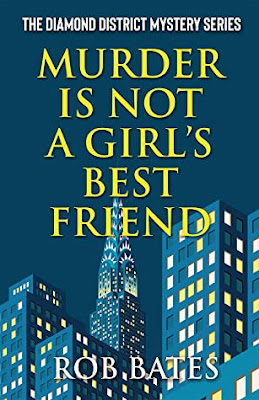


Murder Is Not A Girl's Best Friend by Rob Bates
Book 2: The Diamond District Mystery Series
Publisher: Camel Press
Publication Date: February 8, 2022
Format: Paperback - 204 pages
               Kindle - 834 KB 
               Nook - 2 MB
ISBN: 978-1942078180
ASIN: B09L2TCB6V
BNID: 978-1942078197
Genre: Mystery


Buy The Book:


Buy The Series: The Diamond District Mystery Series
Book 1: A Murder Is Forever
Book 2: Murder Is Not A Girl's Best Friend


Disclaimer: I received a copy of the book from the author / publisher in exchange for my honest review and participation in a virtual book tour event hosted by Partners In Crime Virtual Book Tours.


Book Description:

Journalist-turned-amateur-sleuth Mimi Rosen is back with her father Max for another action-packed tale of murder and intrigue in New York City’s Diamond District.

A Reverend from Africa has found a sparkling $20 million diamond that he hopes will free his continent from the scourge of blood diamonds. But this attempt to do good soon turns very bad. After the diamond is stolen and leads to a series of murders, Mimi discovers both the diamond and the Reverend have a less-than-sparkling history.

Soon, Mimi is investigating a web of secrets involving a shady billionaire, a corrupt politician, Africa’s diamond fields, offshore companies, as well as an activist, filmmaker, computer genius, and police detective who may or may not be as noble as they appear. Is the prized gem actually a blood diamond?


Book Excerpt:


CHAPTER ONE

Mimi Rosen felt terrible. She felt like crap. She was overcome by guilt—the kind that gets lodged in your throat and stays there. Her day at the “Social Responsibility and the Diamond Industry” conference had been draining and dispiriting, as one speaker after another grimly recited the industry’s ills. They acknowledged that conflict diamonds—which fueled civil wars in countries like the African Democratic Republic, or the ADR—were far less of a problem, and many diamond mines benefited local economies.

Then came the “but.” As Mimi’s father said, “in life, there’s always a but.”

“Beautiful gems shouldn’t have ugly histories,” thundered Brandon Walters, a human rights activist known for his scorching exposés of the ADR’s diamond industry. “This—” he aimed his finger at the screen behind him, “is how ten percent of the world’s diamonds are found.”

Up popped a photo of an African boy, who couldn’t have been older than sixteen. He was standing in a river the color of rust, wearing nothing but cut-off jeans, bending over with a strainer. Mimi could see his vertebrae under his skin, feel the sun beating down on him, sense the stress and strain on his back.

“That kid is paid two dollars a day for his labor,” Walters declared. “If you sell diamonds, this may not be your fault.” He paused for emphasis. “But it is your responsibility.”

Walters had sandy-blonde hair, high cheekbones, a perfectly trimmed goatee, a ponytail that flopped as he talked, and a South African accent was so plummy it sounded affected. He looked to be in his mid-twenties but had the bearing and confidence of someone ten years older. Unlike the other activists, who delivered their speeches in whispery monotones with their eyes glued to the podium, Walters planted his feet firmly at the center of the stage and stood on it like he owned it. He peppered his talk with splashes of theater, dropping his voice to signal despair, or cranking it up to roar disapproval.

Mimi didn’t want to close her eyes to his message, but knew she might have to, to preserve her sanity. Diamonds were now how she made her living. She had been working at her father’s company for over a year—a fact she sometimes found hard to believe. She occasionally dreamed of again working as a reporter—the only thing in life she had ever wanted to be. But journalism had become an industry that people escaped from, rather than to.

She had hoped the conference would inspire her. She had even convinced her father, Max, to come. Instead, the sessions made her feel depressed and sorry for herself—which didn’t feel right, as she was hearing about extreme poverty in a plush New York City auditorium with the air conditioning cranked, while the summer sun broiled the streets outside.

She also knew the industry’s problems weren’t so easy to fix. When Mimi started working at her dad’s company, Max seemed intrigued by her idea of a socially-responsible diamond brand. She was excited to help change the industry.

Then the project ran into roadblocks. She never quite determined what a “good” diamond was. What if it was unearthed by one of the diggers Brandon Walters talked about, who earned two dollars a day? Human rights activists condemned that as exploitive. Yet, they also admitted those workers had few other sources of income and would be far worse off if the industry vanished. They didn’t want to kill the business; they wanted to reform it. Mimi wasn’t an expert on any of this—and even those who were didn’t always agree.

Mimi spent many nights and weekends researching these issues, and ended up frustrated, as the answers she sought just weren’t there.

When her project began losing money, her father started losing patience. Mimi hoped that dragging her father to this conference would reignite his interest. Nope.

“These people act like everything is our fault. All minerals have issues.” Like many in the diamond business, Max believed his industry was unfairly picked on. He fixed his yarmulke on his bald head, so it stayed bobby pinned to one of his side-tufts of hair. “I haven’t done anything wrong. I’m only trying to pay my rent.”

Max spent most of the conference with his arms crossed, his face toggling between bored and annoyed. If he had a phone, he’d probably spend the day staring at it. But he didn’t, which was another issue.

Following Walters’ talk, he leaned over to Mimi. “I should call Channah for my messages.”

Mimi gave him her mobile and a dirty look. He had already borrowed her phone six times that day. She considered lecturing her father to get over his stupid aversion to buying a cell phone, so he didn’t constantly pester the receptionist to see who called. But she’d also done that six times that day.

Besides, she was intrigued by the day’s final speaker.

Abraham Boasberg grabbed the crowd’s attention the moment he stepped on stage. “I believe there is a reason that God put diamonds in the poor countries and made rich countries desire them,” he bellowed, puffing out his barrel chest. “And I’m going to prove it.”

Mimi sat up and thought, who was this guy?

She soon found out. Boasberg was six feet tall, stocky, bearded, with a bright red yarmulke capping a salt-and-pepper mop of curly hair. He worked in the diamond business, and his words came fast and forceful. Like Brandon Walters, he seemed to savor being the center of attention. He had a mike clipped to his suit and prowled the stage like a panther. His presence filled the auditorium.

“This whole conference, we have heard about the problems of our trade. They are real. The people who dig diamonds are part of our industry. They deserve to be treated fairly.

“But we must do more than just complain,” he declared, holding up his index finger. “We need solutions!

“What if diamonds, which once helped rip the African Democratic Republic apart, could put it back together? What if they built new roads, schools, and hospitals?” He stopped and took a breath, his chest heaving. “What if diamonds became symbols of hope?”

Max returned to his seat and handed Mimi back her phone. She was so entranced with Boasberg, she barely noticed.

“A few months ago,” Boasberg proclaimed, “a local Reverend in the African Democratic Republic found a one-hundred-and-seventeen-carat piece of rough on his property. It has since been cut into a sixty- six-carat piece of polished, about the size of a marble. It has been graded D Flawless, the highest grade a diamond can get. It’s the most valuable diamond ever found in the ADR. It’s worth twenty million. Easy.”

A giant triangular gem appeared on the screen behind him, gleaming like a sparkly pyramid.

Max’s eyebrows shot up. This guy was talking diamond talk, a language he understood.

“But that is more than a beautiful diamond.” Boasberg declared, sweat beading on his forehead. “That is the future.”

“Here’s what usually happens with diamonds in the ADR. In most cases, miners hand them over to their supporter, who’s basically their boss who pays their bupkis. Or, if they’re freelance, they’ll sell them to a local dealer, who pays them far below market value. The miners don’t know how much the diamonds are worth, and they’re usually hungry and just want a quick buck.

“And since the ADR has no money to police its borders, most dealers smuggle diamonds out of the country to avoid taxes. As a result, the ADR gains little from what comes out of its soil. Its resources are being systematically looted.

“When I met Reverend Kamora, I told him, consumers are turning away from diamonds because they believe they don’t help countries like yours. That further hurts your people. Now, instead of working for two dollars a day, they’ll do the same work for even less.

“But what if we can flip the script? What if this diamond helps your country? And what if we let people know that? That will increase its value. It’s documented that people will pay extra for products that do good, like Fair Trade Coffee. It’s the same reason kosher food is more expensive. It’s held to a higher standard.

“If we get more money for this diamond, soon every gem from the ADR will be sold this way. We’ll do an end run around the dealers who have robbed the country blind. We’ll turn ADR diamonds into a force for good.” He pivoted to the screen. “Let’s talk about this gorgeous gemstone.

We wanted to call it the Hope Diamond. That name was taken.” A few members of the audience tittered.

“We’re calling it the Hope for Humanity Diamond. Four weeks from now, we’ll auction it from my office, live on the Internet. We want the whole world to watch. We’ll even sell it in a beautiful box produced with locally mined gold.” On screen, a glittering yellow box appeared. The diamond sat inside it, perched like a king on a throne.

“What celebrity wouldn’t want to wear a diamond called the Hope for Humanity?” Boasberg asked. “It will make them look glamorous and morally superior.”

The audience laughed.

“This diamond—” he exclaimed as spit flew out of his mouth, “will transform a continent.” He stretched out his arms, revealing pit stains the size of pancakes.

“So many conferences talk about Africa, but you never hear from people who actually live there. And so, I’ve flown in the Reverend who found the diamond, to talk about what it can do for his country. Reverend Kamora, can you come here, please?”

The auditorium grew quiet as small middle-aged Reverend Kamora shuffled to the front. He walked slowly, gripping the guardrail as he climbed the stairs to the stage. When he finally arrived at the microphone, Mimi could barely hear him; his voice was low and delicate, with the soft cadence of a bell.

“For years,” he began, “blood diamonds were a curse on my country. Things happened that were hard to describe. They haunt us still.” He paused, as he momentarily got choked up.

“The African Democratic Republic has known two decades of peace, but not one minute of prosperity. Like many people in my country, I dig for diamonds for extra money. It’s hard work. I don’t make much from it. But I have no choice.

“Many people who work in my country’s diamond fields don’t understand why people in the rich countries buy diamonds. Some believe they are magic. And when I found this gem in a riverbed, sparkling in the sun, I thought God had blessed me with a bit of magic.

“But God’s real gift came when I met Mr. Boasberg. He told me that we could hold an auction for this diamond, receive a better price for it, and ensure the proceeds benefit the people of my country.

“I hope you tune into the auction of the Hope for Humanity Diamond four weeks from today. Together, we can change my country’s diamonds from a curse to a blessing. That will really be magic.”

After a tough day, Mimi felt a smidgen of optimism. When Reverend Kamora finished speaking, her eyes were filled with tears. She peered at her father. He was asleep.

After Reverend Kamora toddled from the stage, Boasberg bounded back to answer questions.

A man approached the microphone in the middle of the audience. “Mr. Boasberg,” he asked, “what are you getting out of this?”

“Nothing,” Boasberg smiled. “I’m not even taking a commission. I see this as the way forward for the business that I love, and a country I care about.”

“Mr. Boasberg,” a second person asked, “how do we know the money will go where you say it will?”

“Our accounts will be posted online and completely transparent.

We’ll account for every penny.”

On it went, Boasberg swatting back every question with the grace of a tennis pro. Maybe it was the journalist in her, but Mimi was growing skeptical. Boasberg’s almost-Messianic tone struck her as too good to be true.

Just then, she heard a familiar voice at the microphone. It was Brandon Walters, the activist who spoke earlier.

“Mr. Boasberg, I’m intrigued by your new initiative,” he said. Mimi braced herself for the “but.”

“But when you talk about dealers who’ve robbed the country blind, you didn’t mention you were once partners with the worst offender.”

Boasberg’s nostrils flared. He looked down at Walters like he wanted to kill him.

The young activist plucked the mic from its stand and spun around to address the audience.

“For those unaware, Mr. Boasberg used to own a company with Morris Novak. During the civil war in the African Democratic Republic, Morris Novak was one of the biggest dealers in blood diamonds. He remains a significant player in the industry, though his main business today is money laundering. Diamonds are kind of a sideline.

“For years, I’ve sought to expose Morris Novak’s corruption. In response, he has repeatedly threatened to sue me. Our friend Mr. Boasberg could help by supplying information about Novak’s business dealings. He won’t.”

He circled back to Boasberg. “So, while it’s admirable you want to play a role in the ADR’s future, maybe first, you should come clean about your past.”

There was a smattering of applause.

Throughout Walters’ speech, Boasberg appeared ready to erupt, and when it ended, that’s what he did. “First of all,” he boomed, “you are correct, Morris Novak is my former partner. Let me emphasize former. I haven’t worked with him in six years. Is that long enough for you?

“Second, who the hell cares? This is old news. The problem with you non-government organizations, you NGOs, is you’re always pointing fingers. Maybe if you stop the holier-than-thou B.S., you could help do something good.”

Walters seemed to relish this reaction. “I’m just saying,” he shot back, “that given your history, and that of certain of your, shall we say, ‘associates,’ you’re an unlikely savior for the ADR.”

This sent Boasberg into a fury. The bickering grew so loud, even Max woke up.

The moderator—a middle-aged woman with silvering hair wrapped in a bun—hurried to the stage and declared question time was over.

“Thank you, Mr. Boasberg for that inspiring presentation,” she said, with a jittery squeak. “The conference organizers would like to present you this humanitarian award for your efforts.”

The award was likely pre-arranged and came off as awkward with Walters’ question hanging in the air. The moderator rushed through her praise of Boasberg, while he impatiently fingered the marble statue. When she finished, he stormed off the stage.

The moderator gamely tried to end the meeting on an upbeat note, saying it had many “impactful takeaways” and “urgent calls to action,” and reminding everyone to attend the post-conference cocktails in the next room. No one listened. They were digesting that final spectacle.

So was Mimi. Walters’ question had transformed Boasberg from a passionate plain speaker to another defensive diamond dealer, like her dad. Maybe he was too good to be true.

***

Excerpt from Murder is Not a Girl's Best Friend by Rob Bates. Copyright 2022 by Rob Bates. Reproduced with permission from Rob Bates. All rights reserved.


My Book Review:

In Murder Is Not A Girl's Best Friend, book two of The Diamond District Mystery Series, author Rob Bates transports the reader to New York City's Diamond District located on 47th Street between Fifth and Six Avenues, for another intriguing mystery story that will keep the reader guessing and turning the pages.

Just when Mimi Rosen thinks she won't be pulled into another murder investigation, she finds herself once again putting on her amateur sleuth hat, and finds out that Murder Is Not A Girl's Best Friend

Mimi Rosen is a journalist turned amateur sleuth, who for the past year has worked as the bookkeeper at her father's gem store, Max Rosen Diamond Company. When Abraham Boasberg, a prominent diamond dealer is murdered in his office and a rare and valuable 66 carat polished diamond with a D Flawless grade goes missing, Brandon Walters, a human rights activist who exposes the diamond industry's dark business is accused and arrested for his murder and the stolen diamond. Mimi is requested to help with Brandon's defense, and to investigate the murder case, and find the valuable diamond. 

What looks like a classic murder case is anything but that when Mimi starts to dig into the diamond industry. The more Mimi digs into the diamond dealing business and the diamond industry, the more she finds out about corruption within the industry, and she is warned to leave it alone, but she is determined to reveal the truth and find the murderer, and hopefully locate the diamond as well. 

Author Rob Bates weaves a slow-building and suspenseful tale that follows Mimi's investigation to uncover the truth behind the murder of the diamond dealer and the location of the diamond. I loved reading this action-packed story. Mimi's observations and digging during the investigation kept me intrigued as she slowly put the pieces of the mystery puzzle together. 

The reader will be easily drawn into this richly descriptive plot that will keep them guessing as long hidden secrets, family dramas, a growing list of possible suspects, motives, and clues are uncovered, while leaving the reader completely shocked by the surprise ending. 

I would be remiss if I didn't mention how much I enjoyed the author's rich description of New York City's Diamond District, and I was fascinated by the background into the Jewish culture and community, who are the mainstay of the diamond industry on 47th Street.

I look forward to hopefully reading more of Mimi's amateur sleuth investigative adventures in The Diamond District Mystery Series.

Murder Is Not A Girl's Best Friend has enough drama, tension, action, dark secrets, intrigue, and unexpected twists and turns that will take the reader on one heck of a thrilling roller coaster ride.


RATING: 4 STARS  


About The Author


Rob Bates has written about the diamond industry for over 25 years. He is currently the news director of JCK, the leading publication in the jewelry industry, which just celebrated its 150th anniversary. He has won 12 editorial awards, and been quoted as an industry authority in The New York Times, The Wall Street Journal, and on National Public Radio. He is also a comedy writer and performer, whose work has appeared on Saturday Night Live’s Weekend Update segment, comedycentral.com, and McSweeneys He has also written for Time Out New York, New York Newsday, and Fastcompany.com. He lives in Manhattan with his wife and son.


Virtual Book Tour


Tour Participants:

02/28 Review @ 5 Minutes for Books

03/01 Review @ sunny island breezes

03/02 Review @ Buried Under Books

03/05 Review @ Book Reviews From an Avid Reader

03/08 Review @ flightnurse70_book_reviews

03/09 Review @ Avonna Loves Genres

03/10 Review @ A Room Without Books is Empty

03/10 Review @ Novels Alive

03/11 Review @ Jersey Girl Book Reviews

03/18 Review @ Pat Fayo Reviews

05/16 Interview podcast @ Blogtalk Radio

05/16 Review @ Just Reviews


Friday, January 22, 2021

A Murder Is Forever by Rob Bates (VBT: Book Review / Contest Giveaway)

In association with Partners In Crime Vistual Book Tours, Jersey Girl Book Reviews is pleased to host the virtual book tour event for A Murder Is Forever by author Rob Bates!


A Murder Is Forever by Rob Bates
Book 1: The Diamond District Mystery Series
Publisher: Camel Press
Publication Date: October 13, 2020
Format: Paperback - 216 pages
               Kindle - 2066 KB / 183 pages
               Nook - 2 MB
ISBN: 978-1603812214
ASIN: B08K3R1DT1
BNID: 978-1603812221
Genre: Mystery


Buy The Book:


Disclaimer: I received a copy of the book from the author / publisher in exchange for my honest review and participation in a virtual book tour event hosted by Partners In Crime Virtual Book Tours.


Book Description:

Max Rosen always said the diamond business isn’t about sorting the gems, it’s about sorting the people. His daughter Mimi is about to learn that some people, like some diamonds, can be seriously flawed.

After Mimi’s diamond-dealer cousin Yosef is murdered–seemingly for his $4 million pink diamond–Mimi finds herself in the middle of a massive conspiracy, where she doesn’t know who to trust, or what to believe. Now she must find out the truth about both the diamond and her cousin, before whoever killed Yosef, gets her.

“[A] sprightly debut …. Bates, who has more than 25 years as a journalist covering the diamond business, easily slips in loads of fascinating information on diamonds and Jewish culture without losing sight of the mystery plot. Readers will look forward to Mimi’s further adventures.” – Publishers Weekly


Book Excerpt:


A MURDER IS FOREVER

By Rob Bates

CHAPTER ONE

As Mimi Rosen exited the subway and looked out on the Diamond District, she remembered the words of her therapist: “This won’t last forever.”

She sure hoped so. She had been working on Forty-Seventh Street for two months and was already pretty tired of it.

To outsiders, “The Diamond District” sounded glamorous, like a street awash in glitter. To Mimi, who had spent her life around New York, Forty-Seventh Street between Fifth and Sixth Avenues was a crowded, dirty eyesore of a block. The sidewalk was covered not with glitz, but with newspaper boxes, cigarettes, stacks of garbage bags, and, of course, lots of people.

Dozens of jewelry stores lined the street, all vying for attention, with red neon signs proclaiming “we buy gold” or “50 percent off.” Their windows boasted the requisite rows of glittery rings, and Mimi would sometimes see tourists ogling them, their eyes wide. She hated how the stores crammed so many gems in each display, until they all ran together like a mess of kids’ toys. For all its feints toward elegance, Forty-Seventh Street came off as the world’s sparkliest flea market.

Mimi knew the real action in the Diamond District was hidden from pedestrians, because it took place upstairs. There, in the nondescript grey and brown buildings that stood over the stores, billions in gems were bought, sold, traded, stored, cut, appraised, lost, found, and argued over. The upstairs wholesalers comprised the heart of the U.S. gem business; if someone bought a diamond anywhere in America, it had likely passed through Forty-Seventh Street.

Mimi’s father Max had spent his entire life as part of the small tight-knit diamond dealer community. It was a business based on who you knew—and even more, who you trusted. “This business isn’t about sorting the diamonds,” Max always said. “It’s about sorting the people.” Mimi would marvel how traders would seal million-dollar deals on handshakes, without a contract or lawyer in sight.

It helped that Forty-Seventh Street was comprised mostly of family businesses, owned by people from a narrow range of ethnic groups. Most—like Mimi’s father—were Orthodox, or religious, Jews. (“We’re the only people crazy enough to be in this industry,” as Max put it.) The Street was also home to a considerable contingent of Hasidic Jews, who were even more religious and identifiable by their black top hats and long flowing overcoats. Mimi once joked that Forty-Seventh Street was so diverse, it ran the gamut from Orthodox to ultra-Orthodox.

Now Mimi, while decidedly secular, was part of it all. Working for her father’s diamond company was not something she wanted to do, not something she ever dreamed she would do. Yet, here she was.

She had little choice. She had not worked full-time since being laid off from her editing job a year ago. She was already in debt from her divorce, which had cost more than her wedding, and netted little alimony. “That’s what happens when you divorce a lawyer,” said her shrink.

Six months after she lost her job, Mimi first asked her father for money. He happily leant it to her, though he added he wasn’t exactly Rockefeller. It was after her third request—accompanied, like the others, by heartfelt vows to pay him back—that he asked her to be the bookkeeper at his company. “I know you hate borrowing from me,” he told her. “This way, it isn’t charity. Besides, it’ll be nice having you around.”

Mimi protested she could barely keep track of her own finances. Her father reminded her that she got an A in accounting in high school. Which apparently qualified her to do the books at Max Rosen Diamond Company.

“We have new software, it makes it easy,” Max said. “Your mother, may she rest in peace, did it for years.”

Mimi put him off. She had a profession, and it wasn’t her mother’s.

Mimi was a journalist. She had worked at a newspaper for nine years, and a website for five. She was addicted to the thrill of the chase, the pump of adrenaline when she uncovered a hot story or piece of previously hidden info. There is no better sound to a reporter’s ears than someone sputtering, “How did you find that out?”

“It’s the perfect job for you,” her father once said. “You’re a professional nosy person.”

She loved journalism for a deeper reason, which she rarely admitted to her cynical reporter friends: She wanted to make a difference. As a girl, she was haunted by the stories they told in religious school, how Jews were killed in concentration camps while the world turned its head. Growing up, she devoured All the President’s Men and idolized pioneering female muckrakers like Nellie Bly.

Being a journalist was the only thing Mimi ever wanted to do, the only thing she knew how to do. She longed to do it again.

Which is why, she told her therapist, she would tell her father no.

Dr. Asner said she understood, in that soft melancholy coo common to all therapists. Then she crept forward on her chair.

“Maybe you should take your father up on this. He’s really throwing you a lifeline. You keep telling me how bad the editorial job market is.” She squinted and her glasses inched up her nose. “Sometimes people adjust their dreams. Put them on hold.”

Mimi felt the blood drain from her face. In her darker moments—and she had quite a few after her layoff—she had considered leaving journalism and doing something else, though she had no idea what that would be. Mimi always believed that giving up her lifelong passion would be tantamount to surrender.

Dr. Asner must have sensed her reaction, because she quickly backtracked.

“You can continue to look for a journalism job,” she said. “Who knows? Maybe working in the Diamond District will give you something to write about. Besides,”— here, her voice gained an edge—“you need the money.” That was driven home at the end of the forty-five minutes, when Dr. Asner announced that she couldn’t see Mimi for any more sessions, since Mimi hadn’t paid her for the last three.

By that point, Mimi didn’t know whether to argue, burst into tears, or wave a white flag and admit the world had won.

It was a cold February morning as Mimi walked down Forty-Seventh Street to her father’s office, following an hour-plus commute from New Jersey that included a car, a bus, and a subway. With her piercing hazel eyes, glossy brown hair, and closely set features, Mimi was frequently told she was pretty, though she never quite believed it. She had just gotten her hair cut short to commemorate her thirty-eighth birthday, hoping for a more “mature” look. She had always been self-conscious about her height; she was five foot four and tried to walk taller. She was wearing a navy dress that she’d snagged for a good price on eBay; it was professional enough to please her father, who wanted everyone to look nice in the office, without being so nice that she was wasting one of her few good outfits. She was bundled up with multiple layers and a heavy coat—to protect against the winter chill, as well as the madness around her.

Even though it was before 9 AM, Forty-Seventh Street was, as usual, packed, and Mimi gritted her teeth as she bobbed and weaved through the endless crowd. She sidestepped the store workers grabbing a smoke, covering her mouth so she wouldn’t get cancer. She swerved around the stern-looking guard unloading the armored car, with the gun conspicuously dangling from his belt. And she dodged the “hawker” trying to lure her into a jewelry store, who every day asked if she had gold to sell, even though every day she told him no.

Finally, Mimi reached her father’s building, 460 Fifth, the most popular address on “The Street.” After a few minutes standing and tapping her foot on the security line, she handed her driver’s license to the security guard and called out, “Rosen Diamonds.”

“Miss,” growled the guard with the oversized forehead who’d seen her three days a week for the past two months, “you should get a building ID. It’ll save you time in the morning.”

“It’s okay. I won’t be working here for long,” she chirped, though she wasn’t quite sure of that.

Next stop, the elevator bank. Mimi had an irrational fear of elevators; she was always worried she would die in one. She particularly hated these elevators, which were extremely narrow and perpetually packed. She envied those for whom a subway was their sole exposure to a cramped unpleasant space.

As the car rose, one occupant asked a Hasidic dealer how he was finding things.

“All you can do is put on your shoes. The rest is up to the man upstairs.”

Only in the diamond business. Mimi’s last job was thirty blocks away, yet in a different universe.

At each floor, dealers pushed and rushed like they were escaping a fire. When the elevator reached her floor, Mimi too elbowed her way to freedom.

As she walked to her father’s office, she marveled how the building, so fancy and impressive when she was a kid, had sunk into disrepair. The carpets were frayed, the paint was peeling, and the bathroom rarely contained more than one functioning toilet. If management properly maintained the building, they’d charge Midtown Manhattan rents, which small dealers like her father couldn’t afford. The neglect suited everyone.

She spied a new handwritten sign, “No large minyans, by order of the fire department.” Mimi produced a deep sigh. She had long ago left her religious background behind. Somehow, she was now working in a building where they warn against praying in the halls. She was going backward.

Perhaps the dealer in the elevator was right. You could only put on your shoes and do your best. She grabbed her pocketbook strap, threw her head back, and was just about at her father’s office when she heard the yelling.

“I’m so tired of waiting, Yosef! It’s not fair!”

Max’s receptionist, Channah, was arguing with her boyfriend, Yosef, a small-time, perpetually unsuccessfully diamond dealer. Making it more awkward: Yosef was Mimi’s cousin.

Channah and Yosef had dated for nearly eighteen months without getting married—an eternity in Channah’s community. Still, whenever Channah complained, Mimi remembered how her ex-husband only popped the question after three years and two ultimatums.

“Give me more time,” Yosef stuttered, as he tended to do when nervous. “I want to be successful in the business.”

“When’s that going to happen? The year three thousand?”

The argument shifted to Yiddish, which Mimi didn’t understand, though they were yelling so fiercely she didn’t need to. Finally, tall, skinny Yosef stormed out of the office, his black hat and suit set off by his red face. He was walking so fast he didn’t notice his cousin Mimi standing against the wall. Given the circumstances, she didn’t stop him to say hello. She watched his back grow smaller as he stomped and grunted down the hall.

Mimi gave Channah time to cool down. After a minute checking in vain for responses to her latest freelance pitch—editors weren’t even bothering to reject her anymore—she rang the doorbell. She flashed a half-smile at the security camera stationed over the door, and Channah buzzed her in. Mimi hopped into the “man trap,” the small square space between security doors that was a standard feature of diamond offices. She let the first door slam behind her, heard the second buzz, pulled the metal handle on the inner door, and said hello to Channah, perched at her standard spot at the reception desk.

Channah had long dark curly hair, which she constantly twirled; a round, expressive face, dotted with black freckles; and a voluptuous figure that even her modest religious clothing couldn’t hide.

“Did you hear us argue?” she asked Mimi.

“No,” she sputtered. “I mean—”

Channah smiled and pointed to the video monitor on her desk. “I could see you on the camera.” Her shoulders slouched. “It was the same stupid argument we always have. Even I’m bored by it.”

“Hang in there. We’ll talk at lunch.” Mimi and Channah shared a quick hug, and Mimi walked back to the office.

She was greeted by her father’s smile and a peck on the cheek. If anything made this job worthwhile, it was that grin. Plus the money.

“How are things this morning?”

“Baruch Hashem,” Max replied. Max said “thank God” all the time, even during his wife’s sickness, when he really didn’t seem all that thankful.

Sure enough, he added, “We’re having a crisis.”

Mimi almost rolled her eyes. It was always a crisis in the office. When Mimi was young, the family joke was that business was either “terrible” or “worse than terrible.”

Lately, her dad seemed more agitated than normal. As he spoke, he puttered in a circle and his hands clutched a pack of Tums. That usually didn’t come out until noon.

“I can’t find the two-carat pear shape.” He threw his arms up and his forehead exploded into a sea of worry lines. “It’s not here, it’s not there. It’s nowhere.”

Max Rosen was dressed, as usual, in a white button-down shirt and brown wool slacks, with a jeweler’s loupe dangling on a rope from his neck. His glasses sat off-kilter on his nose, and two shocks of white hair jutted from his skull like wings. When he was excited about something, like this missing diamond, the veins in his neck popped and the bobby-pinned yarmulke seemed to flap on his head.

Mimi stifled a laugh. That was the crisis? Diamonds always got lost in the office. As kids, Mimi and her two sisters used to come in on weekends and be paid one dollar for every stone they found on the floor. “They travel,” Max would say.

It was no surprise that things went missing in that vortex of an office. Every desk was submerged under a huge stack of books, magazines, and papers. The most pressing were placed on the seat near her father’s desk, what he called his “in-chair.”

When Mimi’s mother worked there, she kept a lid on the chaos. After her death, Max hired a few bookkeepers, none of whom lasted; two years later, the job had somehow fallen to Mimi.

Eventually, Channah found the two-carat pear shape, snug in its parcel papers, right next to the bathroom keys. The only logical explanation was that Max was examining it while on the toilet.

Max sheepishly returned to his desk. Mimi loved watching her father at work. She was fascinated by how he joked with friends, took grief from clients, and kept track of five things at once. It felt exotic and forbidden, like observing an animal in its natural habitat.

For the most part, they got along, which was no small thing. Over the years, there had been tense moments as he struggled to accept that she was no longer religious. Lately, he rarely brought the topic up, and she didn’t want him to. Her split from her non-Jewish ex probably helped.

On occasion, the old strains resurfaced, in subtle ways. Max’s desk was covered with photos—mostly of Mimi’s mom and her religious sisters and their religious broods. One time when Max was at lunch, Mimi tiptoed over to glance at them, and—not incidentally—check how many were of her. It made her feel silly, yet she couldn’t help herself. She was a professional nosy person.

She got her answer: out of about twenty photos, Mimi was in three, an old family photo and two pics from her sisters’ weddings. That was less than expected. She tried not to take it personally. She had no kids and her marriage was a bust. What was there to show off?

Mimi spent most of the morning deciphering her father’s books—a task made more difficult by his aging computer system, which regularly stalled and crashed. Her father’s “new” software was actually fifteen years old.

Sometimes she wished he gave her more substantial tasks to do. While her father would never say it, he didn’t consider the diamond industry a place for women, as it had always been male-dominated—even though, ironically, it catered mostly to females. That was fine with Mimi. She didn’t want to devote her life to a rock.

At 1 PM, Channah and Mimi headed for Kosher Gourmet, their usual lunch spot. Mimi always joked, “I don’t know if it’s kosher, but it’s not gourmet.”

In the two months Mimi had worked for her father, she and Channah had become fast friends, bonding over their shared love of mystery novels, crossword puzzles, and sarcastic senses of humor.

Channah was not Mimi’s typical friend. She was twenty-three and her parents were strictly religious, even more than Mimi’s. She commuted to Forty-Seventh Street every day on a charter bus from Borough Park, a frum enclave in Brooklyn. The Diamond District was her main exposure to the wider world. She reminded Mimi of her younger, more religious self, under her parents’ thrall yet curious what else was out there.

Mimi was not Channah’s typical friend either. During their lunches, Channah quizzed her on the taste of non-Kosher food (it didn’t taste any different, Mimi told her); sex (“When the time comes,” Mimi said, “you’ll figure it out”); and popular culture (“Can you explain,” Channah once asked, “why Kim Kardashian is famous?” Mimi just said no.) Today, as usual, they talked about Yosef.

“I don’t get it.” Channah wrapped sesame noodles around her white plastic fork. “I love him. He loves me. Why not get married?”

Mimi took a sip from her Styrofoam cup filled with warm tap water. She preferred bottled water but couldn’t afford it. “Have you thought of giving Yosef an ultimatum? Tell him if he doesn’t marry you by a certain date, that’s it.”

“Yosef wouldn’t take that seriously.” Channah turned her eyes to her tray.

“Why not?”

“Cause I’ve done that already. Three times! I backed down every time.” Her fork toyed with her food. “I believe it is beshert that Yosef and I will end up together. I’ve thought so since I first met him at your father’s office, and he smiled at me. What choice do I have?” Her elbow nudged her tray across the table.

“I understand why he’s waiting. He wants to be a steady provider. That’s a good thing, right?”

Actually, Mimi found it sexist. She didn’t say that, because she found many things in Channah’s world sexist.

“He just needs to sell that pink,” Channah said, spearing a dark brown cube of chicken.

Mimi took a quick sip of water. “That pink” was an awkward subject.

One month ago, Yosef had bought a three-point-two carat pink diamond. It was the biggest purchase of his career, the kind of high-risk move that could make or break his business. Max was overjoyed. “Do you know how rare pink diamonds are?” he exclaimed. “And it’s a three-carater! Sounds like a great buy!”

That was, until Yosef proudly presented it to his uncle Max, who inspected it under his favorite lamp, muttered “very nice,” and quickly handed it back.

It was only after Yosef left that Max dismissed his nephew’s score as a strop, a dog of a diamond, the kind of unsellable item that gathered dust in a safe.

“It has so many pepper spots,” Max lamented. “The color’s not strong at all. No one will buy that thing.”

“Maybe he got it for a good price,” Mimi said.

“I’m sure whoever sold it to him said it was the bargain of the century. Anytime someone offers me a metziah, that’s a sign they can’t sell the stone. There’s a saying, ‘your metziah is my strop.’” His face sagged. “I wish he talked to me first. That stone is worthless. I don’t have the heart to tell him.”

When Channah brought up the big pink at lunch, Mimi didn’t want to dwell on the subject. “What’s happening with that?” she asked, as casually as possible.

“Didn’t you hear?” Channah jerked forward. “It got the highest grade possible on its USGR cert.”

“You’ll have to translate.” Mimi tuned out most diamond talk.

“Cert is short for certificate, meaning grading report. The USGR is the U.S. Academy for Gemological Research, the best lab in the industry.”

Mimi just stared.

“That stone’s worth four million dollars.”

That Mimi understood. “Wow.” A lot of money for a dog of a diamond.

“Four point one million, to be exact.” Channah laughed. “Don’t want to leave that point one out!”

“I thought that stone was—”

“Ugly?” Channah chuckled. “Me too! I don’t understand how it got that grade. I guess it doesn’t matter. As your father says, ‘today the paper is worth more than the diamond.’” She slurped some diet soda.

“Is Yosef going to get four million dollars?”

“Who knows? He isn’t exactly an expert in selling such a stone. Your father convinced him to post it on one of the online trading networks. Someone called him about it yesterday.”

“That’s great!”

“Hopefully. If anyone could screw this up, Yosef could.” Channah’s mouth curled downward. “I keep checking my phone to see if there’s any news.” She flipped over her iPhone, saw nothing, and flipped it back. “The way I figure, if he sells that stone, he’ll have to marry me. Unless he comes up with some new excuse. He wouldn’t do that, right? Not after all this time. Would he?”

Mimi struggled to keep herself in check. She was dying to shake Channah and scream that if Yosef wasn’t giving her what she wanted, it was time to move on. She didn’t. Yosef was her cousin. Mimi was in no position to critique someone else’s love life. She always told people hers was “on hold.” It was basically non-existent.

Plus, she remembered how, weeks before her wedding, her friends warned her that her fiancé had a wandering eye. That just strengthened her resolve to marry him, even though in retrospect, they were right. “With situations like that,” her therapist said later, “I always recommend not to say anything. Just be a supportive friend.”

Mimi waited until Channah stopped speaking. She touched her hand. “I’m sure it will work out,” she said.

***

Excerpt from A Murder is Forever by Rob Bates. Copyright 2020 by Rob Bates. Reproduced with permission from Rob Bates. All rights reserved.


My Book Review:

In A Murder Is Forever, book one of The Diamond District Mystery Series, author Rob Bates transports the reader to New York City's Diamond District located on 47th Street between Fifth and Six Avenues, for an intriguing mystery story that will keep the reader guessing and turning the pages.

Just when you think diamonds are forever ... Mimi Rosen finds out that A Murder Is Forever too ... 

Mimi Rosen is an unemployed journalist who works part-time as the bookkeeper at her father's gem store, Max Rosen Diamond Company. When her cousin Yosef Levine, a small-time diamond dealer is murdered in a robbery, Channa Morgenstern, Yosef's newly engaged fiancee, doesn't think Yosef's murder was random but rather a set up, and she asks Mimi to investigate the murder. 

What looks like a classic robbery / murder case is anything but that when Mimi starts to dig into the Diamond District's industry located on 47th Street, and comprised mostly of Orthodox / Hasidic Jewish families and companies. The more Mimi digs into her cousin's diamond dealing business and the diamond industry, the more she is warned to leave it alone, but she is determined to reveal the truth and seek justice for her cousin's murder, even if someone wants to permanently stop her. 

Author Rob Bates weaves a slow-building and suspenseful tale that follows Mimi's investigation to uncover the truth behind the murder of her cousin. I loved reading this action-packed story. Mimi's observations and digging during the investigation kept me intrigued as she slowly put the pieces of the mystery puzzle together. 

The reader will be easily drawn into this richly descriptive plot that will keep them guessing as long hidden secrets, family dramas, a growing list of possible suspects, motives, and clues are uncovered, while leaving the reader completely shocked by the surprise ending. 

I would be remiss if I didn't mention how much I enjoyed the author's rich description of New York City's Diamond District, and I was fascinated by the background into the Jewish culture and community, who are the mainstay of the diamond industry on 47th Street.

I look forward to reading the next book in The Diamond District Mystery Series.

A Murder Is Forever has enough drama, tension, action, dark secrets, intrigue, and unexpected twists and turns that will take the reader on one heck of a thrilling roller coaster ride.


RATING: 4 STARS  


About The Author


Rob Bates has written about the diamond industry for over 25 years. He is currently the news director of JCK, the leading publication in the jewelry industry, which just celebrated its 150th anniversary. He has won 12 editorial awards, and been quoted as an industry authority in The New York Times, The Wall Street Journal, and on National Public Radio. He is also a comedy writer and performer, whose work has appeared on Saturday Night Live’s Weekend Update segment, comedycentral.com, and McSweeneys He has also written for Time Out New York, New York Newsday, and Fastcompany.com. He lives in Manhattan with his wife and son.


Contest Giveaway

Win A $15 Amazon Gift Card

or 

Paperback / eBook Copy of A Murder Is Forever


This is a rafflecopter giveaway hosted by Partners in Crime Virtual Book Tours for Rob Bates. There will be one (1) winner of one (1) Amazon.com Gift Card and there will be three (3) winners of one (1) Physical OR eBook (WINNER’s Choice!!) edition of A Murder Is Forever by Rob Bates (US and Canada ONLY). The giveaway begins on December 1, 2020 and runs through February 2, 2021. Void where prohibited. 


a Rafflecopter giveaway


12/03/20 Interview/showcase @ CMash Reads

12/08/20 Review @ The Review Crew

12/09/20 Review @ Books and Zebras @ jypsylynn

12/10/20 Showcase @ Reading A Page Turner

12/11/20 Showcase @ Archaeolibrarian - I Dig Good Books!

12/13/20 Showcase @ EienCafe

12/14/20 Review @ Book Reviews From an Avid Reader

12/14/20 Review @ Jane Pettit Reviews

12/15/20 Showcase @ Im Into Books

12/15/21 Review @ The World As I See It

12/16/20 Interview @ BooksChatter

12/18/20 Showcase @ The Book Divas Reads

12/21/20 Guest post @ Quiet Fury Books

12/30 Showcase @ 411 ON BOOKS, AUTHORS, AND PUBLISHING NEWS

12/30/20 Review @ Avonna Loves Genres

01/05/21 Review @ sunny island breezes

01/06/21 Review @ Scrapping & Playing

01/07/21 Interview @ A Blue Million Books

01/11 Showcase @ The Pulp and Mystery Shelf

01/13/21 Showcase @ Nesies Place

01/17/21 Showcase @ nanasbookreviews

01/22/21 Review @ Jersey Girl Book Reviews

01/25/21 Interview @ Podcast

01/25/21 Review @ Just Reviews

01/26/21 Review @ rozierreadsandwine

01/30/21 Review @ A Room Without Books is Empty

01/31/21 Review @ Margaret Yelton